Abakuh is a saint of the Catholic Church.
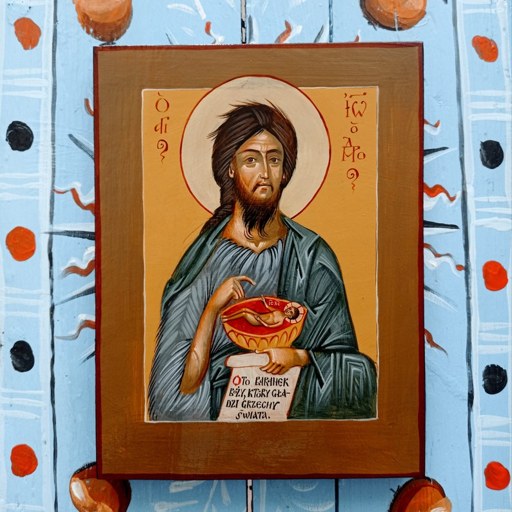
https://www.etsy.com/uk/listing/1518487637/saint-john-the-baptist-picture-icon
License: unknown
Abakuh
Saint- Gender
- male
- Church
- Catholic
Places
Roles & Family
Biography
Abakuh (also rendered Abakih, Apa Kuh, or Abba Kouh) is a Christian martyr commemorated in the Coptic Orthodox Church. Traditional accounts preserved in the Coptic Synaxarium identify him as a native of Bahnasa, the ancient city of Oxyrhynchus in Middle Egypt. He lived in the late Roman period and served as a soldier in the imperial army. Beyond this outline, no independent contemporary documents—such as trial records, papyri, or official acta—survive that would allow a fuller reconstruction of his family, education, or military career.
According to the hagiographical tradition, when the persecution of Christians intensified under Emperor Diocletian in the early fourth century, Abakuh voluntarily presented himself to the civil authorities and declared his allegiance to Christ. He refused to offer sacrifice to the Roman gods. The governor then subjected him to torture. Remaining steadfast, he was finally beheaded and thus completed his martyrdom. The narrative follows a conventional pattern shared by many Egyptian soldier-martyr stories of the period: public confession, endurance of torment, and execution by the sword.
The historical record for Abakuh is limited to these liturgical notices. No source names the governor who condemned him or supplies a precise year of death within the Diocletianic persecution (commonly dated to the first decade of the fourth century). His story circulated in Coptic and later Arabic recensions of the Synaxarium and belongs to the large body of local Egyptian martyr cults that took shape in late antiquity. He is not recorded as having held any episcopal, patriarchal, or papal office, nor is he associated with a monastic order in the surviving accounts.
Nothing is documented concerning a spouse or children. His veneration has remained primarily within the Coptic tradition of Egypt. Standard hagiographical reference works do not attribute to him widely recognized patronages of places, professions, illnesses, or social groups. The exact date of his liturgical commemoration should be confirmed against current Coptic Orthodox calendars, as notices of obscure soldier-martyrs sometimes vary among manuscripts and printed synaxaria.