Abbess Publia is a saint of the Catholic Church. Abbess Publia's feast day is celebrated on 9 October.
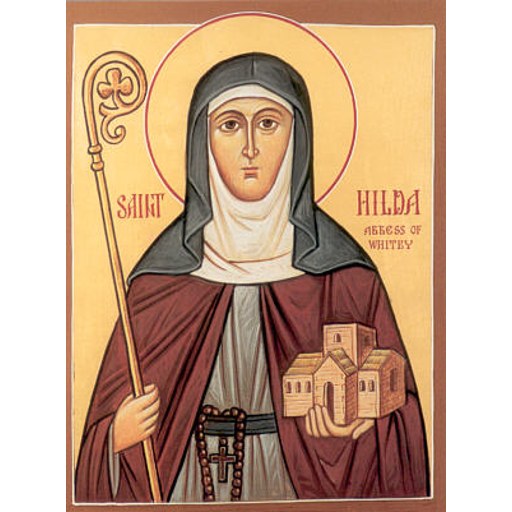
https://handmadeiconsgreece.myshopify.com/en-us/products/saint-hilda-abbess-of-whitby
License: unknown
Abbess Publia
Saint- Feast Day
- 9 October
- Gender
- female
- Church
- Catholic
Roles & Family
Biography
Saint Publia, also known as Publia the Confessor or Deaconess Publia of Antioch, was a Christian woman of notable piety who lived in Antioch in Roman Syria during the fourth century. She is remembered principally for her public defiance of the Roman emperor Julian, called the Apostate, during his residence in Antioch in 362 and 363. Near-contemporary ecclesiastical history, above all the account given by Theodoret of Cyrrhus in his Ecclesiastical History, presents her as a woman of distinction who presided over a choir or community of virgins consecrated to perpetual virginity. Later liturgical tradition in the Eastern churches commonly styles her a deaconess and an abbess.
According to Theodoret, when Julian was in Antioch the virgins under Publia's direction sang psalms as the emperor passed near their dwelling. The verses they chose, among them the lines from the Psalter concerning the idols of the nations being silver and gold and the call for God to arise and scatter his enemies, were understood as a pointed rebuke of Julian's restoration of pagan cult. Julian first ordered them to be silent; when they continued and even raised their voices, he had Publia, described as an elderly woman and the leader of the group, brought before him. He commanded that she be struck on both cheeks. Theodoret records that she endured the blows and that the emperor did not proceed immediately to harsher punishment. Julian left Antioch not long afterward for his Persian campaign, in which he was killed in 363.
The historical record does not preserve a verified year of Publia's birth or death, nor reliable names of her parents, a husband, or children. Hagiographical notices of later centuries sometimes describe her as a widow who, after her husband's death, received the office of deaconess and gathered young women into a life of prayer and virginity. These details are not found in Theodoret's fifth-century narrative and cannot be independently confirmed from earlier sources. She is believed to have remained in Antioch and to have died in peace some time after the events of 362-363, having earned the title of Confessor for suffering for the faith without undergoing death as a martyr.
In the Eastern Orthodox Church she is commemorated on 9 October as Saint Publia the Confessor, Deaconess of Antioch. Her memory is preserved in synaxaria and menologia rather than in an extensive independent vita. She is not widely associated with particular patronages of places, professions, or causes in the manner of many later medieval saints. Veneration of Publia belongs to the early Christian cult of confessors who resisted the last major pagan restoration in the Roman Empire, and her story has been transmitted chiefly as an example of liturgical courage and of the public role that consecrated women could play in the urban church of fourth-century Syria.