Abbo II is a saint of the Catholic Church (d. 707).
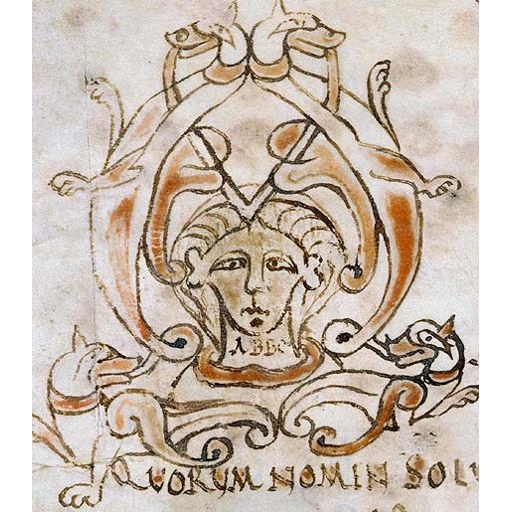
License: Public domain
Abbo II
Saint- Life Span
- d. 707
- Gender
- male
- Church
- Catholic
Places
Roles & Family
Biography
Abbo II of Metz, also known as Abbon II, was a Frankish prelate who served as bishop of Metz in the late Merovingian period. He occupied the episcopal see from 697 until his death in 707 and is conventionally numbered as the thirty-fifth bishop of that diocese. Almost nothing is known of his family origins, early life, or education. No contemporary charter, letter, or narrative source records the circumstances of his birth or the path by which he entered the clergy. He is attested principally through later episcopal catalogues of Metz, which place him in succession after Saint Chlodulf (also called Clodulf or Cloud), son of Saint Arnulf of Metz, whose long episcopate ended around 697.
The diocese of Metz, seated in the principal city of Austrasia, was among the most important ecclesiastical centers of the Frankish kingdoms in the seventh century. Metz had been a residence of Austrasian kings and remained a focal point of aristocratic and religious life even as real political power increasingly passed to the mayors of the palace. Abbo II’s decade as bishop therefore coincided with the ascendancy of Pepin of Herstal, who after the Battle of Tertry in 687 exercised dominant authority over the Frankish realms. The cathedral church of Saint Stephen at Metz and its clerical community formed the institutional setting of his ministry, but no surviving document describes his pastoral activity, synodal participation, or relations with the Austrasian court.
Historical knowledge of Abbo II depends almost entirely on the medieval lists of the bishops of Metz. Paul the Deacon, writing his Gesta episcoporum Mettensium in the late eighth century at the request of Bishop Angilram, treated the earlier bishops of Metz with uneven detail and devoted his fullest attention to figures such as Arnulf; lesser-known occupants of the see, including Abbo II, receive little or no narrative development in that work. Subsequent catalogues preserved the sequence and the approximate dates of 697–707, which modern historians of the diocese have generally accepted, though such dates for the Merovingian episcopate often rest on later compilation rather than on strictly contemporary annals. No vita, miracle collection, or liturgical office of early date is known to have been composed in his honor, and he does not appear among the bishops of Metz who acquired an established medieval cultus.
Abbo II was succeeded in the see after 707; later lists commonly name Aptatus among those who followed him, though reconstruction of the episcopal succession in the early eighth century remains in some points uncertain. His episcopate belongs to a poorly documented stretch of Metz’s history between the well-remembered saint-bishops of the seventh century and the more fully recorded Carolingian prelates of the eighth. In the absence of charters issued in his name or of narrative anecdotes attached to him, Abbo II remains a name in the episcopal fasti rather than a figure whose personality, policies, or piety can be described from the sources. He died in 707, almost certainly while still in office; the place of his death and burial is not recorded in any surviving reliable account.