Abbot Firmin is a saint of the Catholic Church.
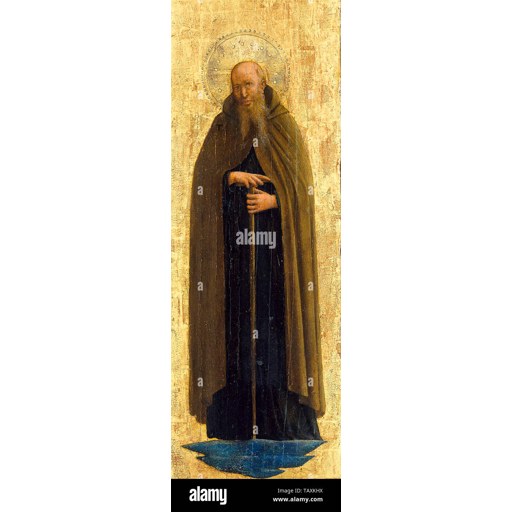
https://alamy.com/stock-photo/saint-anthony-abbot.html
License: unknown
Abbot Firmin
Saint- Gender
- male
- Church
- Catholic
Roles & Family
Biography
The historical figure designated as Abbot Firmin cannot be identified with certainty in the principal sources of Western hagiography. Neither the Roman Martyrology, the Acta Sanctorum of the Bollandists, nor the standard modern dictionaries of saints record an abbot of this name whose life can be reconstructed from contemporary or near-contemporary evidence. The personal name Firmin (Latin Firminus) was relatively common among the clergy of late-antique and early-medieval Gaul, yet the individuals who bore it and later received cult are almost invariably described as bishops rather than as monastic superiors.
The best-known saint of the name is Firmin of Amiens, a missionary bishop of the third century whose legend places his birth in Pamplona and his martyrdom in Picardy; he is nowhere called an abbot. A later Firminus served as bishop of Uzès in the sixth century, and still other bishops named Firmin appear in the episcopal lists of Metz and elsewhere. None of these prelates matches the title given in the present inquiry. It is therefore possible that Abbot Firmin refers to a purely local monastic founder or reformer whose memory never spread beyond a single community and whose written vita, if it ever existed, has not survived.
In the absence of charters, necrologies, or liturgical calendars that can be securely linked to such an abbot, no year of birth or death, no place of origin, and no details of monastic profession can be verified. Even the religious order to which he may have belonged remains unknown; while the Benedictine Rule became the dominant form of Western monasticism from the eighth century onward, an earlier abbot might have followed a mixed or Columbanian observance. Any statement about the precise century or region in which he lived would be conjectural.
Because the office of abbot in the Latin Church presupposed a life lived under a monastic rule, it may reasonably be inferred that the subject observed celibacy and did not marry or father children. This, however, is an inference from the title rather than a fact documented in a surviving source. No feast day, patronage, or formal act of canonization or beatification can be attached to him on the basis of reliable historical evidence.
Further investigation in unpublished monastic cartularies or local diocesan archives might eventually bring an Abbot Firmin to light. Until such evidence appears, the life of this figure must be regarded as unknown, and all biographical fields that cannot be verified from a named historical source are left blank.