Abbot Martin is a saint of the Catholic Church.
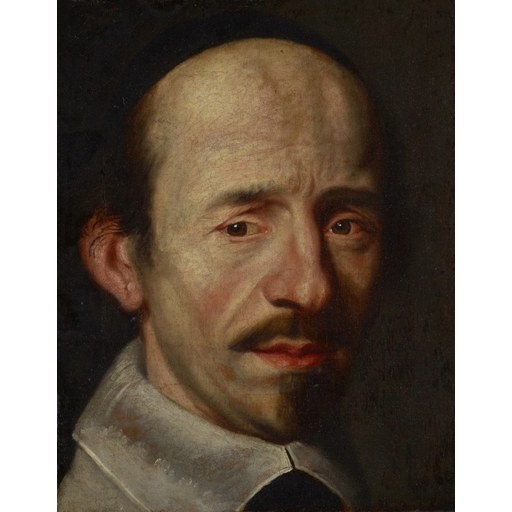
https://artvee.com/dl/portrait-of-martin-de-barcos-abbot-of-saint-cyran-en-brenne/
License: unknown
Abbot Martin
Saint- Gender
- male
- Church
- Catholic
Roles & Family
Biography
The designation “Abbot Martin” does not identify a single, uniquely documented historical person. Martin was among the most common monastic names in Latin Christendom after the fourth-century cult of Martin of Tours, and dozens of abbots, priors, and monastic founders bore it from late antiquity through the later Middle Ages. Surviving charters, necrologies, and local martyrologies record Benedictine, Cistercian, Cluniac, and other superiors named Martin in Gaul, the British Isles, the Iberian Peninsula, Italy, and the German-speaking lands. Without a toponym (for example Vertou, Pairis, or Saujon), a religious order, a century, or a feast date, no vita, episcopal list, or reliable chronicle can be attached to the subject of this query.
Hagiographical literature frequently compounded the problem by transferring miracles, virtues, and even feast days from one Martin to another. Some locally venerated abbots named Martin received cults that never obtained universal recognition; others appear only as signatories on land grants or as names in monastic obituaries. Because the present request supplies neither a Wikidata identifier nor a stable Wikipedia article, it is not possible to assign a verified year of birth, year of death, place of origin, or burial site. Substituting the year an unnamed Martin took office, or borrowing dates from Martin of Tours or Martin of Braga, would be conjecture rather than history.
In the Latin monastic tradition an abbot was normally a professed monk bound by a rule that implied celibacy, yet even that general pattern cannot be treated as documented fact for an unidentified individual. Affiliation with a particular order—Benedictine, Cistercian, or otherwise—likewise remains unknown. No reliable source links this unspecified Abbot Martin to the papacy or to any patriarchal see of the Orthodox, Oriental Orthodox, Coptic, or Church of the East communions. Patronages, canonization or beatification processes, and a liturgical feast day are equally unattested for want of a distinct identity.
What can be said with caution is only the broader context: men named Martin served as monastic superiors across many centuries and regions, some of them later commemorated in local calendars. The absence of further identifiers means that every precise biographical field must remain empty. Honesty about that obscurity is preferable to constructing a composite saint from unrelated Martins.