Abra of Poitiers is a saint of the Catholic Church. Abra of Poitiers's feast day is celebrated on 12 December.
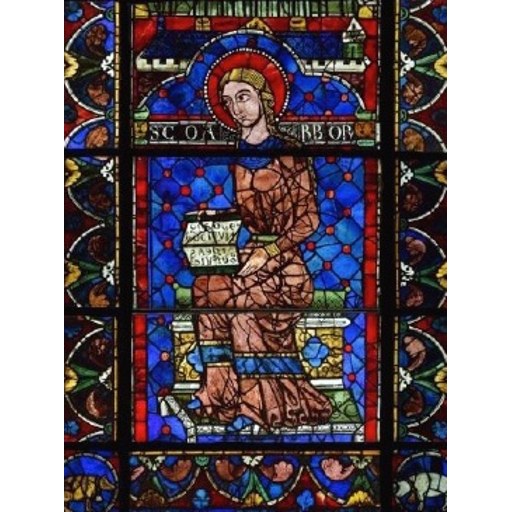
Octave 444
License: CC BY-SA 4.0
Abra of Poitiers
Saint- Feast Day
- 12 December
- Gender
- female
- Church
- Catholic
Places
Roles & Family
Biography
Abra of Poitiers, also known in French devotion as Sainte Abre and sometimes rendered Apra, was a Christian woman of the fourth century in Roman Gaul, remembered above all as the daughter of Hilary of Poitiers, the theologian-bishop later honored as a Doctor of the Church. She was born at Pictavium, the later Poitiers, into a family of standing among the Gallo-Roman civic elite. Hilary, a man of classical literary formation, lived as a pagan until adulthood; he married and fathered Abra before his conversion. Traditional reconstructions often place her birth in the later 330s, but no contemporary civil or ecclesiastical register survives, and that figure should be treated only as an approximation. The household’s conversion to Christianity is generally situated not long before Hilary’s elevation to the episcopate of Poitiers, around the middle of the fourth century. According to the received account, Abra was baptized together with her parents while she was still a child.
Hilary’s uncompromising opposition to Arianism led the emperor Constantius II to exile him from Gaul to Phrygia in Asia Minor, a banishment that lasted several years in the later 350s. From the East the bishop wrote to his daughter. A letter addressed to Abra, together with a morning hymn composed for her use, belongs to the Hilarian tradition and is the most important documentary trace of her life. In that correspondence the father urges her to remain steadfast in the faith and to embrace consecrated virginity, a form of life already esteemed in the fourth-century Church though not yet organized in the later monastic orders. Later hagiography presents Abra as having followed this counsel, living at Poitiers as a dedicated virgin, perhaps among other women similarly vowed, at a period when female ascetic communities in Gaul were only beginning to take shape.
She is said to have died young, still in adolescence or early adulthood, around the time of Hilary’s return from exile or shortly afterward. Later martyrologies and local chronicles often give a death date near 360, again without the support of a contemporary obituary. No ancient source records a marriage or children; the consistent portrait is that of an unmarried consecrated virgin. She was buried at Poitiers, where a cult developed in close association with that of her father. The veneration remained essentially local. She appears in calendars of Poitiers and of Gaul on 12 December. There was no papal canonization of the medieval or Tridentine kind; her sanctity belongs to the early period of episcopal and popular cultus.
Beyond these outlines, verifiable detail is scarce. Later legends sometimes attribute to her the foundation of a church or a community of virgins, or surround her death with miraculous signs, but such episodes lack firm fourth-century attestation and should be regarded as pious elaboration. What can be affirmed with reasonable historical caution is her identity as Hilary’s daughter, the exile correspondence that links father and child, her reputation for consecrated virginity, her early death at Poitiers, and a durable if modest liturgical memory in the church of that city.