Abraham of Egypt is a saint of the Catholic Church.
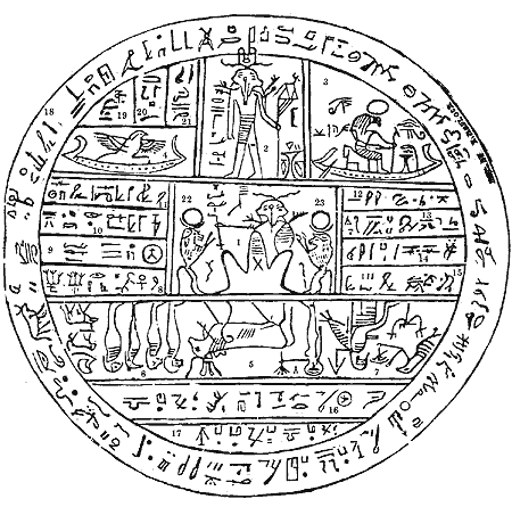
Abraham, Joseph Smith, Reuben Hedlock
License: Public domain
Abraham of Egypt
Saint- Gender
- male
- Church
- Catholic
Places
Roles & Family
Biography
Abraham of Egypt is a Christian saint associated with Egypt and remembered in Eastern Christian tradition, especially in Coptic and related Oriental Orthodox circles. Surviving historical documentation of his life is extremely limited. No contemporary biography, dated inscription, or detailed notice in the major early church historians can be securely attached to him, and responsible modern reference works therefore treat the figure with caution. He is known chiefly by the geographical epithet of Egypt, which indicates that his life and cult were rooted in that country, the historic heartland of Christian monasticism in late antiquity.
Egypt in the fourth and fifth centuries became the classic land of the Desert Fathers and Mothers. Communities at Nitria, Kellia, Scetis, and in the Thebaid attracted men and women who sought a life of prayer, fasting, and withdrawal from the world. Numerous monks bore the biblical name Abraham, and collections such as the Apophthegmata Patrum preserve sayings attributed to more than one Abba Abraham. It is possible that the saint later designated Abraham of Egypt is identical with one of these monastic elders, but the evidence does not allow a firm identification. In the absence of a distinctive vita he is best regarded as one of the many locally venerated Egyptian ascetics whose individual stories were only partially recorded.
There is no reliable evidence that Abraham of Egypt held episcopal, patriarchal, or papal office, nor that he was a martyr whose passion was written up in the manner of the great Egyptian martyrdoms of the Diocletianic persecution. Tradition, so far as it speaks at all, presents him as a monk or hermit rather than as a public hierarch. Dates of birth and death are unknown and should not be supplied by conjecture, nor confused with the years in which other men named Abraham took ecclesiastical office. Place of burial is likewise unrecorded in accessible sources. No spouse or children are documented.
Veneration of Abraham of Egypt appears to have remained relatively localized. He does not occupy a prominent place in the Roman Martyrology or in the best-known Byzantine menologia, which suggests that his cult did not travel far beyond Egypt and neighboring Oriental Orthodox communities. No list of patronages of places, professions, or causes is securely attested. Formal canonization of the later medieval and modern type does not apply to a figure of this kind; like other early monastic saints he would have been recognized by acclamation within his community and entered into local liturgical calendars. The historian’s task is therefore modest: to record that a saint named Abraham was remembered in Egypt, to refuse to invent a biography where the sources are silent, and to set him against the well-documented background of Egyptian Christian asceticism.