Abraham of Scetes is a saint of the Catholic Church.
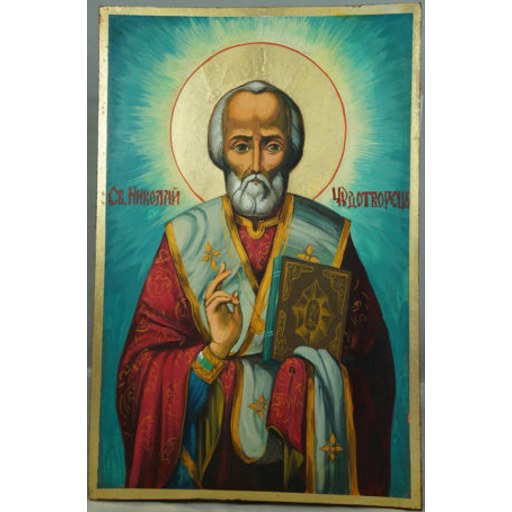
https://blessedmart.com/shop/hand-painted-icons/male-saints-icons/holy-righteous-abraham
License: unknown
Abraham of Scetes
Saint- Gender
- male
- Church
- Catholic
Places
Roles & Family
Biography
Abraham of Scetis (also spelled Abraham of Scetes or of Scete) is remembered in Christian tradition as a monk of the desert of Scetis in Egypt. Scetis, known in Arabic as Wadi El Natrun, lies in the Nitrian Desert west of the Nile Delta and became, from the fourth century, one of the principal centres of Christian monasticism. The region is especially associated with Macarius the Great and with the scattered cells, lavras, and later coenobia that together formed the Scetiote monastic landscape. Monks of Scetis were famed for austerity, manual labour, fasting, night prayer, and spiritual counsel; their sayings were later gathered in the collections known as the Apophthegmata Patrum. The designation of Scetis locates Abraham within that world, but it does not by itself yield a recoverable individual life. No reliable historical source supplies a verified year of birth or of death, a place of origin, a burial site, or a securely dated career.
The desert of Scetis was not a single monastery but a district of hermits and small communities, punctuated by gatherings for the Eucharist and by the authority of elders (abbas). Its history included severe disruptions, among them raids by desert peoples in the late fourth and fifth centuries that scattered the monks, and the doctrinal conflicts that followed the Council of Chalcedon in 451, which divided Egyptian Christianity. Any monk styled of Scetis lived under that demanding discipline and amid those crises, yet it is not possible on present evidence to assign Abraham to a particular generation. Desert literature mentions more than one Abba Abraham, including a disciple of Abba Agathon and a disciple of Abba Sisoes; whether Abraham of Scetis is identical with one of these figures, with another otherwise unknown hermit, or with a name preserved only in later lists cannot be demonstrated from the sources. Identification with better-documented homonyms such as Abraham of Kidunaja, Abraham of Farshut, or Pope Abraham of Alexandria is not warranted.
Because so little can be verified, later notices must be treated with caution. Early Egyptian monks were commonly honoured by local memory and liturgical custom rather than by a formal process of canonization of the later medieval Western type. Calendars of the Coptic, Ethiopian, and Byzantine churches include various saints named Abraham, but a distinct, universally agreed feast day for Abraham of Scetis is not established in the major martyrologies without risk of confusion with other men of the same name. No reliable source records a spouse; as a monk of Scetis he belonged to the celibate desert tradition. There is no documentation of children, nor of any episcopal, patriarchal, or papal office. No specific patronages are securely attached to him in the historical record.
The historical interest of Abraham of Scetis therefore lies less in a biography that can be written in the ordinary sense than in the collective witness of the monks of Scetis. Their way of life shaped Eastern monasticism and, through pilgrims and translations, influenced the West. Scetis remained a living monastic landscape in the Coptic Church, with ancient houses such as those of Macarius, Bishoi, and the Syrians continuing in later centuries. In that long tradition the name of Abraham of Scetis stands among the many ascetics whose personal story has been largely lost, while the institution and spirituality they represented continued to be remembered. A careful account can place him only in the general world of Egyptian desert monasticism and must leave blank the particulars of birth, death, and deeds wherever the sources are silent.