Abraham of Smolensk is a saint of the Catholic Church (d. 1222). Abraham of Smolensk's feast day is celebrated on 21 August.
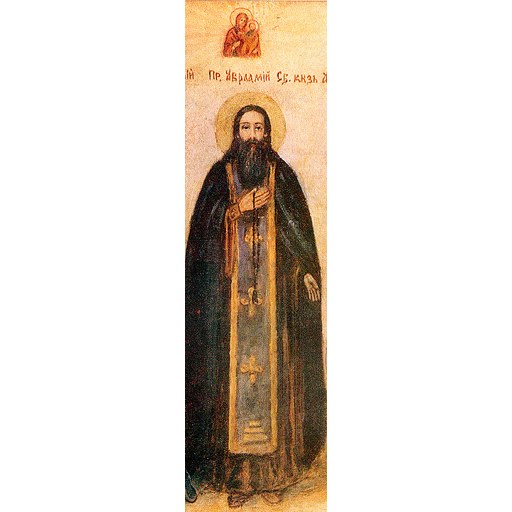
License: Public domain
Abraham of Smolensk
Saint- Life Span
- d. 1222
- Feast Day
- 21 August
- Gender
- male
- Church
- Catholic
Places
Roles & Family
Canonization
Biography
Abraham of Smolensk (also called Avraamy or Avraamii of Smolensk) was a monk, priest, and preacher in the Principality of Smolensk in the late twelfth and early thirteenth centuries. He is venerated as a saint and wonderworker in the Eastern Orthodox Church. Nearly everything that can be said about his life depends on a hagiographical Life written by his disciple Ephraim. That text portrays a learned urban ascetic whose preaching and personal following brought him into conflict with other clergy in Smolensk; it is a work of edification rather than a chronicle, and independent contemporary notices of Abraham are scarce. He belongs to the generation of Rus’ churchmen who lived in the decades before the Mongol invasions of the 1230s.
According to Ephraim, Abraham was born in Smolensk to a family of some means. After the death of his parents he distributed his inheritance to churches, monasteries, and the poor and entered the monastic life at a house of the Mother of God at Selishche near the city. There he was known for strict fasting and prayer, for copying books, and for painting icons. He was ordained priest and became a popular preacher. The sermons attributed to him in the Life emphasize repentance, judgment, and moral reform; whether they also carried apocalyptic or otherwise controversial overtones is suggested by later accusations but cannot be reconstructed in detail from surviving evidence.
His reputation drew crowds and, the Life says, the envy of some among the Smolensk clergy, who accused him of heresy and of teaching without proper authorization. Bishop Ignatius of Smolensk at first accepted the charges: Abraham was forbidden to preach, publicly humiliated, and confined. No independent dossier of the alleged errors survives, so the episode is best read as a local clerical quarrel filtered through a disciple’s narrative of unjust suffering. In time Ignatius reversed himself, acknowledged that Abraham had been wronged, and restored him. Abraham then became abbot of a monastery dedicated to the Position (Deposition) of the Robe of the Mother of God, with which his later years and his burial are associated.
Orthodox tradition commonly places his death in 1222, though the year is conventional rather than documented by a contemporary annalistic entry. Local veneration as a wonderworker grew in Smolensk and was received more widely in the Russian Church; his principal feast is 21 August. Beyond Ephraim’s Life the historical record remains thin: precise years of birth, tonsure, and ordination are unknown, and the doctrinal content of the accusations against him cannot be verified. What can be said with caution is that Abraham represents the type of book-copying, icon-painting, preaching hieromonk active in a major Rus’ city on the eve of the thirteenth-century catastrophes, and that his cult remained closely tied to Smolensk.