Abrahamite is a saint of the Catholic Church. Abrahamite's feast day is celebrated on July 8.
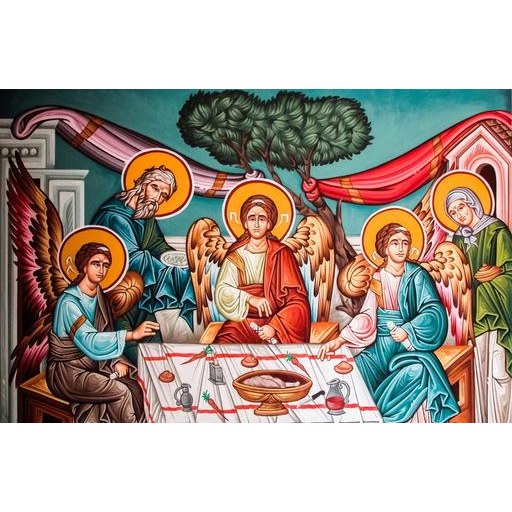
https://picryl.com/media/abrahams-philoxenia-painting-iconography-religion-2a21a6
License: unknown
Abrahamite
Saint- Feast Day
- July 8
- Gender
- male
- Church
- Catholic
Places
Roles & Family
Religious Information
Biography
The name Abrahamite, in hagiographical usage, does not denote a single well-documented individual with a recoverable civil biography. It refers to the Abrahamite monks, a community of Eastern Christian monks of Constantinople who were put to death in the ninth century for defending the veneration of sacred images. They belonged to a monastery in the imperial capital known as the monastery of the Abrahamites, or of Abraham. Their memory is preserved chiefly in brief martyrological notices rather than in a full vita or in named personal acts. The setting of their death is the second period of Byzantine Iconoclasm, when imperial policy again forbade the cult of icons after the first restoration that followed the Second Council of Nicaea in 787. Emperor Theophilus, who reigned from 829 until 842, was the last of the iconoclast emperors and among the most determined; monastic houses that refused to comply with iconoclastic decrees were exposed to imprisonment, exile, mutilation, and execution.
According to the Roman Martyrology, the Abrahamite monks suffered at Constantinople under Theophilus and were crowned with martyrdom for the worship of holy images. The precise year of their execution is not recorded in the surviving notices, nor are the personal names of the monks, their places of origin, or the exact judicial process that condemned them. Hagiographers therefore cannot assign a verified birth year or a single death year to the group. They are commemorated collectively. In this they resemble other unnamed or little-named monastic martyrs of the iconoclastic age, whose witness later orthodox tradition valued as a confession of the Incarnation: because the Word had taken flesh, the defenders of icons argued, material images of Christ and the saints could be venerated without idolatry. No reliable narrative survives of the founding of their house, of its exact site within the city, or of the manner of their deaths beyond the martyrological statement that they were put to death for that cause.
Western liturgical books assign their feast to 8 July and localize the event at Constantinople. There is no securely attested separate feast under this title in the principal Eastern calendars, and no burial place is named in the standard martyrologies. The monks were never the object of a formal papal canonization or beatification of the later medieval or modern judicial type; their cult rests on inclusion in the martyrology, an ancient form of ecclesiastical recognition of martyrdom. No specific patronages of places, professions, illnesses, or causes are attached to them in the major directories of saints.
As members of a Byzantine monastic community they lived under Eastern monastic discipline and are accordingly understood as celibate religious. Nothing is known of any marriages or children before they entered religion, and no individual among them is recorded as having held the office of pope, patriarch, or catholicos. Beyond the fact of their monastery, their stand for icons, their death at Constantinople in the reign of Theophilus, and their commemoration on 8 July, the historical record does not support further biographical detail. They should not be confused with the later Bohemian sect of the same name, an eighteenth-century deistic group that claimed to follow the religion of Abraham before the Law and has no connection with these ninth-century monastic martyrs.