Abundius the Sacristan is a saint of the Catholic Church (d. 564). Abundius the Sacristan's feast day is celebrated on 14 April.
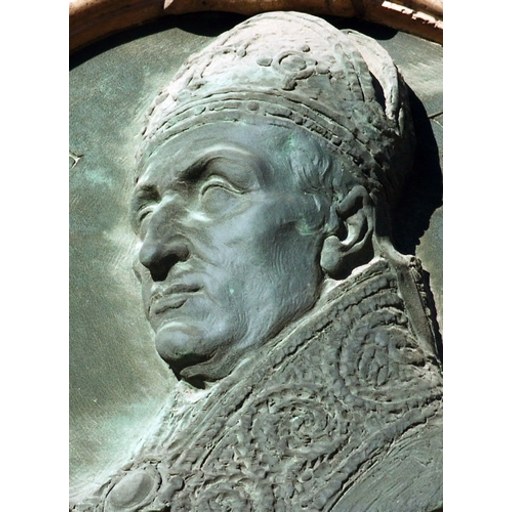
https://catholicsaints.info/tag/name-abundius
License: unknown
Abundius the Sacristan
Saint- Life Span
- d. 564
- Feast Day
- 14 April
- Gender
- male
- Church
- Catholic
Places
Relics & Where to Venerate
Location unknown
The bodily remains of Abundius the Sacristan are a first-class relic. Venerated at St. Peter's Basilica.
Roles & Family
Biography
Abundius the Sacristan, also called Abundius Mansionarius, was a sixth-century custodian of the Constantinian basilica of Saint Peter on the Vatican Hill in Rome. Virtually nothing can be established about his birth, family, education, or the path by which he entered church service. The only near-contemporary witness is Pope Gregory I, who included two short miracle narratives about him in Book III of the Dialogues, a work composed around 593. Gregory describes Abundius as a man of marked humility and constant prayer, already known among the Roman faithful for holiness of life. The Latin title mansionarius denotes the officer charged with the care of lamps, sacred vessels, and the day-to-day custody of a major shrine; it does not by itself indicate whether he was a priest, a cleric in minor orders, or a devout layman, and Gregory never clarifies the point.
The first and best-known episode in the Dialogues concerns a woman named Palatina, long paralyzed and unable to walk. She received a vision instructing her to go to Saint Peter’s and ask the sacristan Abundius to lay his hand upon her. Carried to the basilica, she found him and made the request. Abundius protested that he was a sinner and unworthy of any such ministry. Palatina insisted that she had been commanded to seek him out by name. Yielding at last, he signed her with the cross and laid his hand on her; she rose immediately, restored to the use of her limbs. Gregory records a second cure, in which a man afflicted with a grave bodily infirmity—later recensions sometimes specify a withered or diseased hand—was likewise healed through Abundius’s touch or prayer. Both stories serve Gregory’s larger argument that miraculous power had not departed from the Church in Italy despite war, plague, and the Lombard invasions.
Later martyrologies and liturgical calendars placed Abundius’s death in or about 564, during the pontificate of Pope John III, and assigned him a feast on 14 April. Gregory himself supplies no date, only the implication that Abundius was already dead when the Dialogues were written. No early source names a burial place, though service at the Vatican basilica makes interment in or near that church a reasonable possibility that cannot be proved. He is not to be confused with the fifth-century bishop Abundius of Como, a different and better-documented figure who appears in the same general period of Italian hagiography.
The cult that grew around the Roman sacristan remained modest. He is entered in some recensions of the Roman Martyrology on 14 April, and medieval and early-modern legendaries simply repeated Gregory’s two anecdotes with little or no independent detail. No reliable evidence survives of a religious profession, of marriage or celibacy, of children, or of any formally defined patronage. What the historical record does support is limited but consistent: in later sixth-century Rome a church servant named Abundius was remembered as a wonder-worker of exceptional humility, and that memory was fixed in writing by Gregory the Great, through whose Dialogues the figure entered the wider Latin sanctoral tradition.