Acatius is a saint of the Catholic Church. Acatius's feast day is celebrated on 9 April.
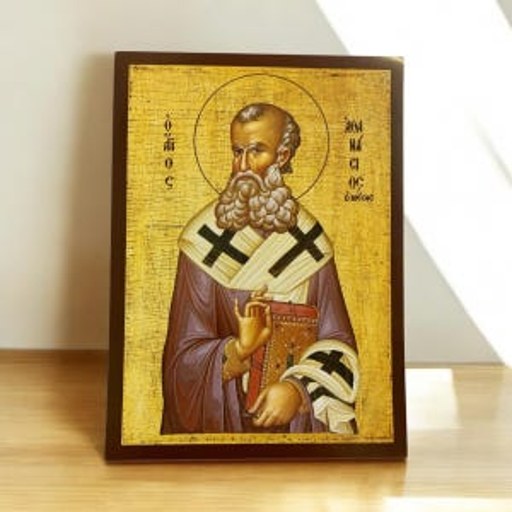
https://www.etsy.com/market/st_athanasius_icon
License: unknown
Acatius
Saint- Feast Day
- 9 April
- Gender
- male
- Church
- Catholic
Roles & Family
Biography
Acatius (also known as Acacius or Akakios) served as bishop of Amida, an important fortress city of Roman Mesopotamia on the upper Tigris (present-day Diyarbakır, Turkey), in the early fifth century. No contemporary document records the year or place of his birth, his parentage, or the date of his consecration. He is known to history almost exclusively through the Ecclesiastical History of Socrates Scholasticus, composed at Constantinople in the 430s, which preserves the memory of a single, striking episode of episcopal charity on the Roman–Persian frontier.
During the war between the Eastern Roman Empire and Sasanian Persia that took place in the early 420s, a large number of Persian prisoners—Socrates gives the figure of seven thousand—were confined at Amida and were dying of hunger. Acatius assembled the clergy of his church and declared that God had no need of gold and silver vessels while men created in the divine image were perishing. He therefore had the liturgical plate melted down and sold, used the money to ransom the captives, clothed and fed them, and sent them back to the Persian king Bahram V furnished with provisions. Socrates adds that the king, astonished by the bishop’s generosity toward enemies, asked to see him and thereafter made peace with the Romans.
The historicity of the core event—the sale of church vessels to redeem prisoners—is not in serious doubt; similar actions by other late-antique bishops are independently attested, and both imperial law and conciliar canons contemplated the alienation of sacred objects for the redemption of captives. The diplomatic sequel narrated by Socrates cannot be confirmed from Persian royal inscriptions or other Roman historians and may reflect the author’s desire to show the moral superiority of Christian clemency. The war of 421–422 did in fact end in a negotiated peace, but multiple political and military factors were at work.
Acatius is commemorated on 9 April in the Roman Martyrology as the bishop of Amida who sold the sacred vessels of the church in order to ransom captives. He is likewise remembered in certain Eastern liturgical traditions. No early source describes the circumstances or date of his death, the place of his burial, or any later translation of relics. He acquired no widely recognized specialized patronages of cities, trades, or illnesses. His lasting significance in Christian memory lies in the concrete example he furnished of the Church’s duty to use its material resources for the relief of human suffering, an example repeatedly cited by medieval and early-modern canonists.