Acepsimas, Joseph and Aeithalas is a saint of the Eastern Orthodox Church (d. 376). Acepsimas, Joseph and Aeithalas's feast day is celebrated on 3 November.
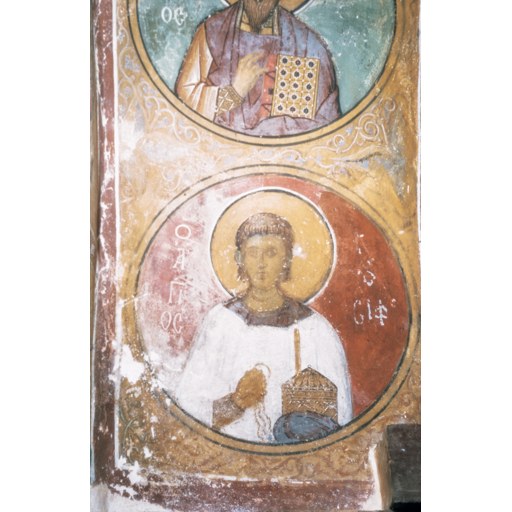
Winfield, David
License: CC0
Acepsimas, Joseph and Aeithalas
Saint- Life Span
- d. 376
- Feast Day
- 3 November
- Gender
- male
- Church
- Eastern Orthodox
Places
Roles & Family
Biography
Acepsimas, Joseph, and Aeithalas were Christian clerics of the Church of the East who suffered martyrdom in the Sasanian Persian Empire during the fourth-century persecution under King Shapur II. Acepsimas (also rendered Acepsimus or Akephsimas) was bishop of Hnaita, a see in the region of Adiabene in northern Mesopotamia. Joseph was a priest associated with Beth-Katuba, and Aeithalas (also Aithalas or Aithilahas) was a deacon of Beth-Nuhadra. Their passion is among the better-attested Persian martyrdoms: Syriac acts of their trial and death survive, and they entered later Greek and Latin martyrological tradition, including the Roman Martyrology.
The persecution of Christians in Persia intensified after the Roman emperors became identified with Christianity, and Shapur II came to treat the Christian population as politically suspect. According to the acts, Zoroastrian Magian officials denounced the three clerics for refusing to worship the sun and the royal fire and for continuing Christian worship. Acepsimas, described as already an old man of about eighty years, was arrested and brought before the authorities; he refused to apostatize. Joseph, said to have been about seventy, and Aeithalas, said to have been about sixty, were likewise seized. All three underwent prolonged imprisonment and corporal punishment.
Traditional Western and Eastern accounts place their sufferings in the later years of Shapur’s reign, commonly in 376. Acepsimas, broken by age and torture, is said to have died in prison. Joseph and Aeithalas were subsequently taken out and killed by stoning. The acts describe further indignities inflicted on their bodies, in the polemical manner typical of Persian martyr literature. While precise chronology and some narrative details cannot be independently verified, historians of the Church of the East generally accept a bishop Acepsimas and companion clerics martyred in Adiabene under Shapur II as reflecting a genuine episode of the mid-to-late fourth-century persecution.
Their cult spread from the Syriac churches into the Byzantine and Roman calendars. They are commemorated together on 3 November in the Roman Martyrology and in Eastern Orthodox synaxaria. They were never the object of a later medieval papal canonization; their recognition as saints belongs to the ancient, pre-congregational cultus of martyrs. Little is recorded of their earlier lives, families, or burial places, and they held neither papal nor patriarchal office. Their memory is that of local pastors who refused to abandon the Christian faith under Sasanian pressure.