Adomnán is a saint of the Catholic Church (d. 704). Adomnán's feast day is celebrated on 23 September. Adomnán is the patron saint of Diocese of Raphoe.
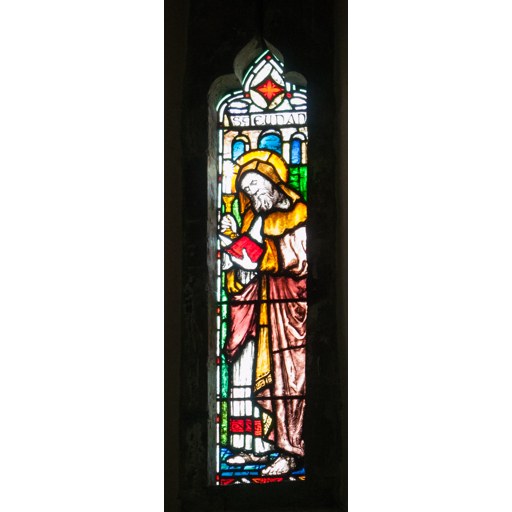
Andreas F. Borchert
License: CC BY-SA 4.0
Adomnán
Saint- Life Span
- d. 704
- Feast Day
- 23 September
- Gender
- male
- Church
- Catholic
Places


Roles & Family
Religious Information
Patronage
Diocese of Raphoe
Biography
Adomnán (also spelled Adamnan and, in later Irish usage, Eunan) was an Irish abbot, hagiographer, canonist, and saint of the later seventh century. He was born in the seventh century among the Cenél Conaill of the northern Uí Néill, in the region that is now County Donegal in Ireland. Later genealogical tradition names his father Rónán mac Tinne and his mother Ronat, and presents him as a kinsman of Saint Columba, sharing descent from Columba’s grandfather. Contemporary annals do not record his birth, and the year often given in modern works is only an estimate based on his reported age at death. He entered the Columban monastic familia, the network of houses that looked to Iona and to Columba’s rule and memory, and he was trained in the Latin learning, biblical study, and ascetic life of that church.
In 679 Adomnán became the ninth abbot of Iona, succeeding Failbe. Iona was then still the mother-house of a wide familia and a place of pilgrimage, scholarship, and political contact among the Gaels of Ireland and Dál Riata and the Picts. As abbot he acted as diplomat as well as monastic superior. He visited Northumbria on more than one occasion and was on friendly terms with King Aldfrith, who had spent time in exile among the Irish and whom Adomnán knew personally. He also travelled to Ireland in the course of his abbacy. In Northumbria he encountered the Roman computation of Easter and the Petrine tonsure. Adomnán accepted the Roman Easter himself and tried to bring Iona over to it; the community on the island refused during his lifetime, though Iona adopted the Roman reckoning in the following decade.
Adomnán’s principal literary monument is the Vita Columbae, written in Latin toward the close of the seventh century. It is the fullest early Life of Columba and a source of the first importance for the history of Iona, for the kingdoms of Dál Riata and the Picts, and for the character of Irish monasticism in the sixth and seventh centuries. The work is arranged in three books, treating Columba’s prophetic revelations, his miracles of power, and his visions of angels, and it draws on the testimony of older monks of the familia as well as on written materials. Adomnán also composed De locis sanctis, a description of Jerusalem, the holy places of Palestine, Constantinople, and other sites, based on the account of the Gallic bishop Arculf, who had travelled in the East and was received at Iona after a shipwreck. Bede later made use of this treatise, which helped to transmit knowledge of the holy places to the Latin West.
In 697, at a great assembly at Birr in the Irish midlands, Adomnán promulgated the Cáin Adomnáin, known also as the Lex Innocentium or Law of the Innocents. The law bound kings and peoples of Ireland and, according to its guarantor list, of Pictish territories as well. It forbade the killing and injuring of women, children, and clergy in the course of war and feud, and it prescribed compensation and penalties under the joint authority of church and secular rulers. The Cáin is one of the most important surviving pieces of early Irish legislation and an early attempt to define and protect non-combatants. Adomnán’s standing as a high-born Uí Néill churchman and as abbot of Iona was essential to gathering the necessary royal and ecclesiastical assent.
Adomnán died on Iona in 704 and was commemorated as a saint from an early date. The Irish annals record his death; his feast is kept on 23 September. He is the patron of the Diocese of Raphoe in his native Donegal, where he is commonly called Saint Eunan and where the cathedral at Letterkenny is dedicated to him. His cult was observed in Ireland and in Scotland. Through the Life of Columba, the Law of the Innocents, and De locis sanctis he remains one of the best-documented and most influential churchmen of the Gaelic world in the century after Columba.