Aetherius is a saint of the Catholic Church (d. 602). Aetherius's feast day is celebrated on 7 June.
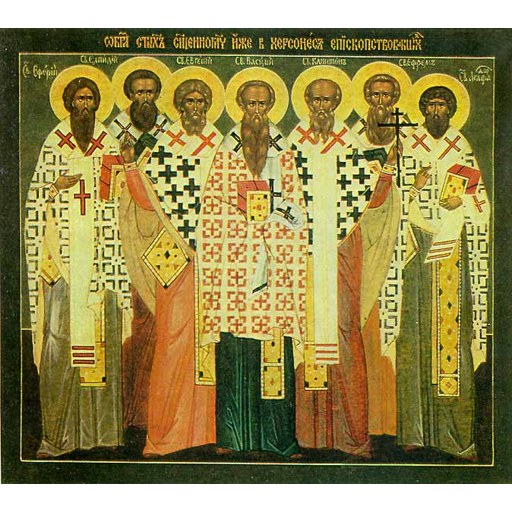
Anonymous, Slavic
License: Public domain
Aetherius
Saint- Life Span
- d. 602
- Feast Day
- 7 June
- Gender
- male
- Church
- Catholic
Places
Roles & Family
Biography
Aetherius (Latin Aetherius; French Éthère or Éthérius) was bishop of Lyon, the ancient metropolitan see of Lugdunum in Gaul, at the end of the sixth century and the beginning of the seventh. He belongs to the line of Gallo-Roman and early Merovingian bishops who governed one of the oldest Christian communities in the West, a church that traced itself to the martyrs of 177 and to Irenaeus. Almost nothing is known of his birth, family, or early career. He does not appear in the surviving narrative of Gregory of Tours, whose Histories close in the early 590s, and no contemporary vita was written. His historical footprint rests on the episcopal catalogs of Lyon, on later liturgical commemoration, and on the Register of Pope Gregory the Great, who addressed him as bishop of Lyon in 599.
The conventional dates of his episcopate, about 589 to 602, come from later medieval lists that assign lengths of reign to each bishop of Lyon. Those lists place him after Priscus and before Secundinus. A Bishop Priscus of Lyon is attested at the Council of Mâcon in 585; Aetherius is therefore usually taken as Priscus’s successor, entering office in the later 580s. In 599 Gregory I wrote to him concerning the pallium and the ordering of relations between Rome and the churches of Gaul. The letter shows Aetherius in communion with the Roman see and treated as a metropolitan whose cooperation mattered. No sermons, letters, or conciliar acts issued by Aetherius himself survive. He is not to be confused with other Gallic bishops of similar name, especially Aetherius of Auxerre, who died several decades earlier.
Lyon in his lifetime remained a major city at the confluence of the Rhône and Saône, even while royal power among the Franks shifted among the courts of Burgundy, Austrasia, and Neustria. Bishops of Lyon combined spiritual and civic roles, overseeing churches, the cults of Pothinus, Blandina, Irenaeus, and Nicetius, and ecclesiastical property. Nothing specific is recorded of Aetherius’s pastoral foundations or political acts. Later tradition sometimes linked him with the care of relics and the city’s basilicas, but such notices cannot be verified from sixth- or seventh-century documents.
He died, according to the traditional chronology of the Lyon catalogs, in 602, almost certainly in Lyon. His cult grew locally and was received into the wider martyrological tradition. The Roman Martyrology and the calendars of the church of Lyon commemorate him on 7 June. Like most Merovingian bishops later honored as saints, he was never the object of a formal papal canonization of the later medieval type; recognition came through immemorial cult, diocesan fasti, and liturgical celebration. Modern knowledge of Aetherius remains limited to his place in the Lyon succession, the papal letter of 599, and his feast day.