Afan is a saint of the Catholic Church. Afan's feast day is celebrated on 16 November. Afan is the patron saint of Llanafan Fawr;Llanafan Fechan;Llanafan y Trawsgoed.
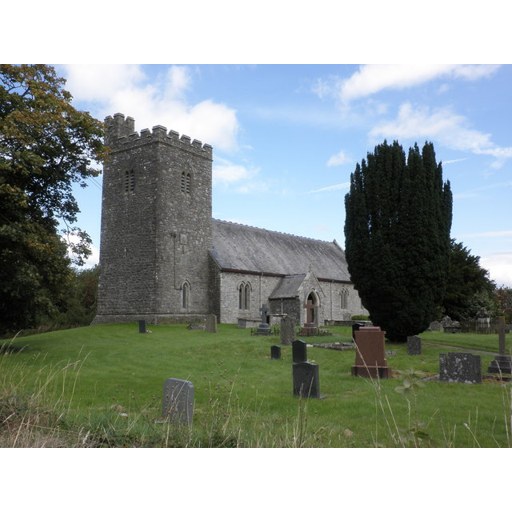
Roger Cornfoot
License: CC BY-SA 2.0
Afan
Saint- Feast Day
- 16 November
- Gender
- male
- Church
- Catholic
Places
Roles & Family
Patronage
Llanafan Fawr;Llanafan Fechan;Llanafan y Trawsgoed
Biography
Saint Afan, known in Welsh as Afan Buellt (Afan of Builth) and in Latin as Avanus, was an early medieval Welsh saint and bishop whose cult was centred on the cantref of Buellt in what is now Powys. No contemporary Life, charter, or martyrology entry survives, and the date of his career cannot be fixed more closely than the fifth or sixth century, the era to which later Welsh tradition assigned many descendants of Cunedda Wledig. What can be said of him rests on medieval saintly genealogies, the place-names of churches dedicated to him, a later medieval inscribed grave-cover at his principal church, and brief notices by early modern antiquaries. He is therefore an obscure figure even by the standards of the early Welsh saints, and claims about his biography must be treated as tradition rather than as documented history.
The medieval tract Bonedd y Saint (Descent of the Saints) names him Afan Buellt ap Cedig ap Ceredig ap Cunedda Wledig, thereby placing him in the royal lineage of the Kingdom of Ceredigion and making him, on that pedigree, a first cousin of Saint David. Such genealogies were compiled centuries after the period they describe and served the status of churches as much as independent biography, yet they show how Afan was remembered as a high-born bishop of the Welsh church. He is explicitly called a bishop on a medieval coped grave slab in the churchyard of Llanafan Fawr, inscribed HIC IACET SANCTUS AVANUS EPISCOPUS (Here lies Saint Avanus the Bishop). The slab is a later medieval memorial, not a contemporary tombstone, but it confirms that by the High Middle Ages his cult identified him as an episcopus. The location of any see he may have held is unknown; modern writers have sometimes associated him with Llanbadarn Fawr or regarded him as a local bishop or chorepiscopus serving the churches of Buellt.
Llanafan Fawr, the great church of Afan in historic Brecknockshire, was the chief focus of his cult. Further dedications exist at Llanafan Fechan in the same district and at Llanafan y Trawsgoed in Ceredigion, indicating that his name was invoked across a stretch of mid Wales. Local tradition, recorded in the early modern period, held that Afan was killed by raiders—sometimes described as Irish pirates or otherwise as wicked men—and that he was buried at Llanafan Fawr. The present parish church occupies that early site, and the commemorative slab remains in the churchyard. No early passion narrative exists, and the circumstances of his death cannot be independently verified; the martyr tradition should be understood as part of the later cult rather than as a recoverable historical event.
Afan's feast day is given as 16 November in calendars of Welsh saints, though some antiquarian compilations have also noted 17 November. He belongs to the large company of pre-congregation saints whose sanctity was recognised by local cult rather than by any formal papal process of beatification or canonization. Apart from the parishes whose churches bear his name, no wider or specialised patronages—of causes, professions, or illnesses—are securely recorded. The historical Afan remains recoverable only through those dedications, the brief genealogical notice, and the bishop's memorial at Llanafan Fawr.