Afanasy is a saint of the Eastern Orthodox Church (1884 - 1937).
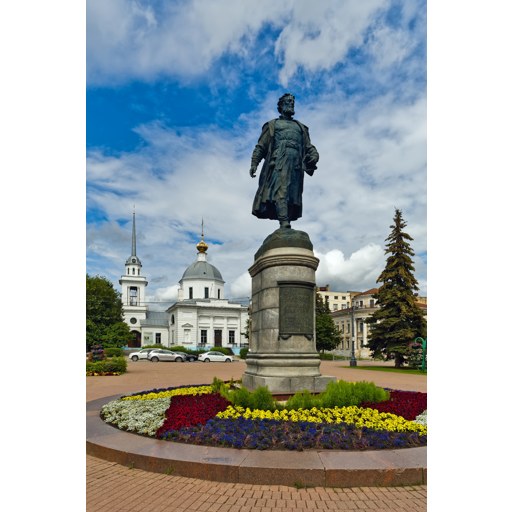
Alexxx1979
License: CC BY-SA 4.0
Afanasy
Saint- Life Span
- 1884 - 1937 (age 53)
- Gender
- male
- Church
- Eastern Orthodox
Places
Canonization
Biography
Afanasy of Brest, known in secular life by the family name Filipovich, was an Eastern Orthodox monk, igumen, writer, and martyr active in the Polish-Lithuanian Commonwealth in the first half of the seventeenth century. Surviving sources place his origin in the Brest-Litovsk region among Orthodox petty nobility. He received an education in Vilnius, then a major center of both Orthodox brotherhood schooling and Jesuit learning, and for a time worked as a teacher before entering monastic life. The religious landscape of his youth was shaped by the Union of Brest of 1596, which created a Uniate church in communion with Rome while preserving Eastern rite and which was accompanied by legal disabilities, church confiscations, and social pressure against those who remained in the non-uniate Orthodox hierarchy.
As igumen of the Monastery of St. Simeon the Stylite in Brest, Afanasy became one of the more outspoken Orthodox critics of the Union. He traveled to Warsaw to petition the Sejm and royal court and, more consequentially, made journeys to Moscow to inform the tsars of the condition of Orthodox communities in the Commonwealth and to seek their intercession. He composed a diary, commonly called the Diariusz, written in a mixture of Polish and Ruthenian, which records his travels, the grievances of the Orthodox, and his theological objections to the Union; the text is an important contemporary source for the period. These activities led to repeated arrests. Authorities regarded him as a disturber of public order and as an agent of Muscovite influence.
In 1648, in a climate of rising Cossack unrest, Afanasy was imprisoned in Brest. Interrogation and torture were applied in an effort to obtain his submission to the Uniate church; he refused. On 5 September 1648 he was taken from confinement and killed outside the city. Traditional accounts, consistent with later examination of the remains, describe death by gunshot followed by blows from edged weapons, after which the body was discarded. The relics were subsequently recovered by the Orthodox community and enshrined at the St. Simeon monastery, where they became a focus of local veneration. Miracles were reported, and Afanasy was commemorated as a martyr for the Orthodox faith. His cult took root in the Belarusian lands of the Commonwealth and was received by the Russian Orthodox Church. He is remembered especially in Brest and among those who honor resistance to forced ecclesiastical union. Precise details of his childhood and the exact year of his birth are not firmly documented in the surviving record, which is typical for non-aristocratic figures of the era; his public activity, writings, and martyrdom are better attested.