Agaton Divotvorec is a saint of the Catholic Church. Agaton Divotvorec's feast day is celebrated on 20 February.
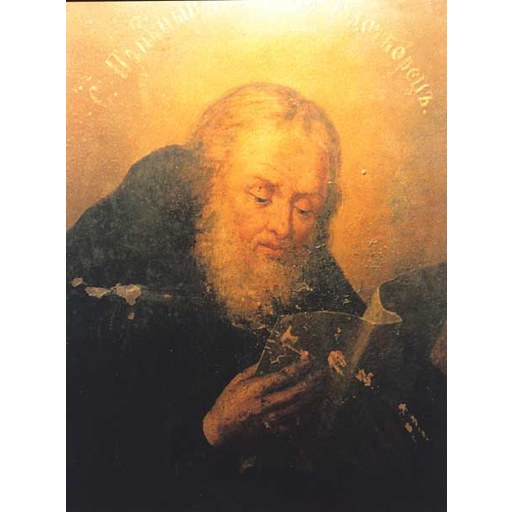
Unknown monk
License: Public domain
Agaton Divotvorec
Saint- Feast Day
- 20 February
- Gender
- male
- Church
- Catholic
Places
Relics & Where to Venerate
Location unknown
The bodily remains of Agaton Divotvorec are a first-class relic. Venerated at Kyiv Pechersk Lavra.
Roles & Family
Religious Information
Biography
Venerable Agathon of the Kiev Caves, known in Slavic hagiographical tradition as Agaton Divotvorec (Agathon the Wonderworker), was an Eastern Orthodox monk of the Kiev Pechersk Lavra who lived in the thirteenth century. Virtually nothing is recorded of his family, the place or date of his birth, his secular name, or the circumstances of his tonsure. The notices preserved in the later Kiev Caves patericon tradition and in Orthodox synaxaria are extremely brief, as is typical for many of the later cave-dwellers whose memory was kept alive chiefly by the presence of their relics and by a short liturgical commemoration rather than by an extended vita. He is numbered among the saints of the Far Caves, also called the Theodosian Caves, the older of the two underground monastic complexes associated with the lavra founded in the eleventh century by Saints Anthony and Theodosius of the Caves.
According to the concise menologion entries, Agathon was a severe faster and ascetic who received from God the gifts of prophecy and of healing the sick, which earned him the epithet Wonderworker (Divotvorec, Church Slavonic and later Russian chudotvorets). These charisms situate him in the established Kiev Caves tradition of monastic healers and seers, a tradition that also includes better-documented figures such as Agapitus the Unmercenary Physician. No detailed miracle narratives, collections of sayings, names of spiritual fathers, or precise chronological markers beyond the thirteenth-century dating have been preserved in the standard liturgical sources. The thirteenth century was a time of catastrophe for Kiev and its monastery: the Mongol sack of the city in 1240 devastated the region, and monastic life in the caves continued thereafter under conditions of insecurity and reduced communal resources. It is in that historical setting that later compilers place Agathon’s hidden ascetic life.
After his death, which occurred at an unknown date within the thirteenth century, his relics were laid in the Far Caves of the lavra, where they have been venerated as incorrupt. The Far Caves contain the remains of numerous monks of the twelfth through fourteenth centuries whose individual biographies were never written out at length. Agathon is commemorated on 20 February, and again on 28 August together with the Synaxis of the Venerable Fathers of the Far Caves of the Kiev Pechersk Lavra. He has not been the object of a widely attested specialized patronage of a particular city, trade, illness, or social group; his cult remains that of a local monastic wonderworker within the broader veneration of the Kiev Caves fathers by the Eastern Orthodox Church.
Because the documentary base is so thin, later writers have sometimes been tempted to pad the notice with generic monastic commonplaces. A historically cautious account must remain within what the liturgical and patericon tradition actually states: that a monk named Agathon, an ascetic and wonderworker of the Far Caves, lived in the thirteenth century, was credited with prophecy and healing, died at the lavra in Kiev, and is venerated among the saints of the Kiev Pechersk Lavra. No year of birth or death, and no details of his origins or monastic formation, are known from reliable sources.