Agileus is a saint of the Catholic Church. Agileus's feast day is celebrated on 15 January.
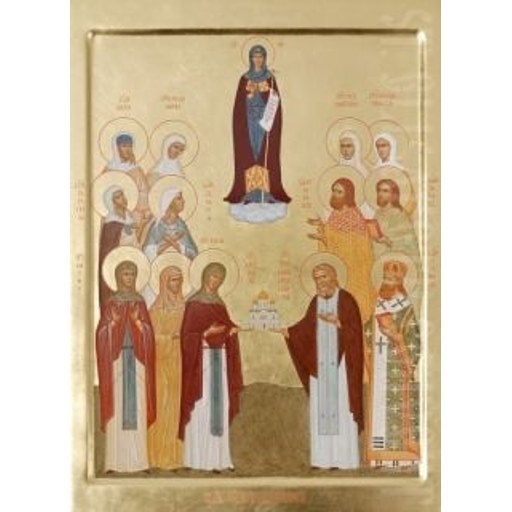
https://catalog.obitel-minsk.com/icons-prav/painted-icons.html
License: unknown
Agileus
Saint- Feast Day
- 15 January
- Gender
- male
- Church
- Catholic
Places
Roles & Family
Biography
Saint Agileus, also known as Agileus of Carthage, was an early Christian martyr whose cult was centered at Carthage in the Roman province of Africa, in what is now Tunisia. Almost nothing can be established about his earthly life. No contemporary passion narrative survives, and later medieval legend did not attach an elaborate story to his name. He is known primarily through liturgical commemoration and through the later existence of a church dedicated to him in Carthage. His martyrdom took place at some point before the late fourth century, since by that time his feast was already observed with sufficient solemnity that Saint Augustine of Hippo preached to the people on the day of his natalis, or heavenly birthday.
The Roman Martyrology records his feast on 15 January with the brief notice that at Carthage Saint Agileus the martyr is commemorated, and that Saint Augustine delivered a sermon to the people on his feast. This entry, drawn from earlier African calendars and from the Augustinian tradition, is the principal documentary witness to his cult. Augustine’s preaching on the martyr’s day illustrates the importance of local martyrs in the pastoral life of the African Church: their anniversaries were occasions for instruction, for the strengthening of the faithful, and for the public memory of those who had died for the faith during the imperial persecutions. The precise persecution in which Agileus died—whether under Decius, Valerian, Diocletian, or another emperor—is not recorded in any source that can be verified, and no reliable year of death has been preserved.
In the later fifth century the historian Victor of Vita, writing of the sufferings of Catholics under the Arian Vandals, mentions a basilica of Saint Agileus at Carthage. The existence of this church shows that the martyr’s cult had a durable architectural and liturgical focus in the city well into the Vandal period. It is customary for African martyrial churches to have stood in some relation to a tomb or relics, but no ancient description or later excavation report identifies the exact site of his burial with certainty. After the Byzantine reconquest of Africa and the subsequent Arab conquest of North Africa, the material traces of his shrine disappear from the historical record.
No ancient author names Agileus’s parents, birthplace, occupation, or ecclesiastical rank. It is not known whether he was a bishop, a priest, a deacon, or a layman, nor whether he was married or had children. He was never the object of a formal process of canonization of the kind later conducted by the papacy; like other martyrs of the first centuries he was recognized as a saint by the local church and entered the martyrologies by popular and episcopal acclaim. No particular patronage of a city, a profession, or a cause is securely attached to him in the major liturgical books. His memory is preserved almost solely in the calendar of the Church on 15 January and in the scattered references of African Christian writers.