Agnellus of Naples is a saint of the Catholic Church (535 - 596). Agnellus of Naples's feast day is celebrated on 14 December. Agnellus of Naples is the patron saint of Naples;Sant'Agnello;Guarcino.
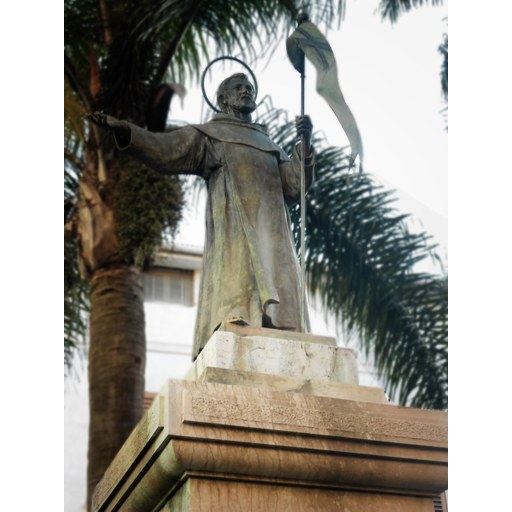
Andreaamiranda
License: CC BY-SA 3.0
Agnellus of Naples
Saint- Life Span
- 535 - 596 (age 61)
- Feast Day
- 14 December
- Gender
- male
- Church
- Catholic
Places
Roles & Family
Religious Information
Patronage
Naples;Sant'Agnello;Guarcino
Biography
Saint Agnellus of Naples, known in Italian as Sant'Agnello di Napoli, was a sixth-century priest, hermit, and abbot whose cult has been centered in Naples since late antiquity. Traditional hagiographical accounts, followed by later martyrologies and local histories, place his birth in Naples in 535, in a prosperous family of the city. Naples then stood at a crossroads of Latin and Greek Christian culture and had only just been contested between Ostrogoths and Byzantines in the Gothic War. Tradition presents Agnellus as a youth of notable piety who devoted himself to prayer and almsgiving. After the death of his parents he is said to have given his inherited wealth to the poor and to have turned away from secular status, a motif common in the lives of monastic saints of this period.
Ordained to the priesthood, Agnellus withdrew to an eremitical life. Later tradition associates his hermitage with a site in Naples linked to the church of Santa Maria Intercede. He subsequently became a monk and then abbot of the monastery of San Gaudioso, a house connected with Saint Gaudiosus of Abitina, the North African bishop who had fled Vandal persecution and established a monastic community near Naples in the fifth century. In the sixth-century Mezzogiorno, monastic life often followed Eastern, Basilian patterns under Byzantine influence, and Agnellus is commonly described as a Basilian abbot. As superior he was remembered for austerity, care of the poor, and the instruction of monks.
Later medieval legend, not confirmed by contemporary chronicles, credits Agnellus with a miraculous role in defending Naples against Lombard assault. In these stories the abbot appeared upon the walls with a cross or banner, and the attackers withdrew. The historical background is the Lombard expansion in Italy after 568, which threatened Campania even while Naples itself remained in Byzantine hands as the nucleus of the later Duchy of Naples. Whether or not any historical kernel lies behind the legend, it shaped his medieval reputation as a civic protector and helps explain his rank among the patron saints of the city.
According to the same traditional chronology, Agnellus died in Naples on 14 December 596. He was buried in the city, and his relics came to be venerated at the church of Sant'Agnello Maggiore a Caponapoli (Sant'Agnello a Caponapoli). The Roman Martyrology commemorates him on 14 December as an abbot of Naples. He is honored as one of the patron saints of Naples, as patron of the coastal town of Sant'Agnello on the Sorrentine Peninsula, which takes its name from him, and as patron of Guarcino in the province of Frosinone. His cult is of the ancient, local, pre-congregation type; no later papal canonization is recorded. Surviving evidence for his life is hagiographical rather than documentary, and precise biographical details beyond the outline preserved in Neapolitan tradition cannot be independently verified from contemporary sources.