Agnellus of Pisa is a blessed of the Catholic Church (1195 - 1236). Agnellus of Pisa's feast day is celebrated on 7 May.
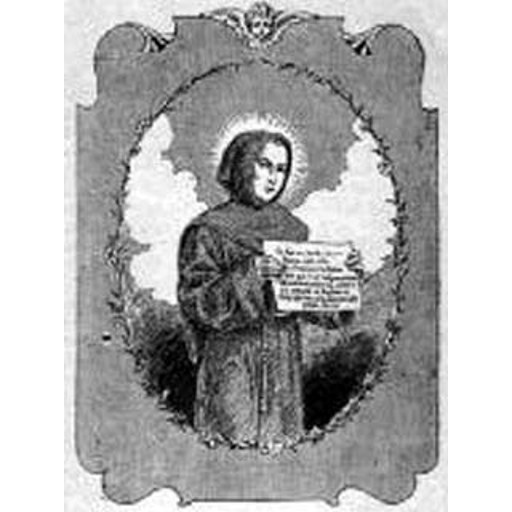
Abraham
License: Public domain
Agnellus of Pisa
Blessed- Life Span
- 1195 - 1236 (age 41)
- Feast Day
- 7 May
- Gender
- male
- Church
- Catholic
Places
Roles & Family
Religious Information
Canonization
Biography
Blessed Agnellus of Pisa belonged to the first generation of the Order of Friars Minor and is remembered as the founder of the Franciscan province of England. He was born at Pisa in Tuscany, of a family of standing often identified with the noble house of the Agnelli, in the last years of the twelfth century. While still a young man he encountered the early Franciscan movement. According to the consistent Franciscan tradition, Saint Francis of Assisi himself received him into the order and clothed him in the habit, most probably during one of Francis’s journeys in Tuscany in the early 1210s. Agnellus thus took up the evangelical poverty and itinerant preaching of the friars while their founder was still alive and while the Rule and the manner of life of the community were still being formed.
Francis soon employed him in the expansion of the order beyond central Italy. Agnellus was sent to France and is associated with the establishment of the Franciscans in Paris, where he held a position of responsibility, sometimes described as that of custos, in the years around 1217 to 1223. In 1224 Francis appointed him the first minister provincial of England and dispatched him with a small company of friars to plant the order in that kingdom. The party, numbering about nine, landed at Dover on 10 September 1224. They were received by the Benedictines at Canterbury, then went on to London, and from there to Oxford. Houses of friars were founded in these places, and Oxford in particular became the centre of Franciscan life and study in England.
As provincial, Agnellus combined the austerity expected of an early Franciscan with a practical concern for learning. He encouraged the friars to study and is credited with laying the foundations of the Franciscan school at Oxford, which within a generation would include notable scholars of the English province. He also took part in the public life of the English church. Chroniclers record that he was used in efforts of mediation, including in tensions involving King Henry III and the Archbishop of Canterbury, Edmund of Abingdon. The principal narrative source for his work and character is Thomas of Eccleston, the thirteenth-century chronicler of the coming of the Friars Minor to England, who presents Agnellus as a man of prayer, poverty, and sound judgment rather than as a figure surrounded by a large cycle of later legends.
Agnellus died at Oxford on 7 May 1236 and was buried in the church of the Greyfriars there. His tomb became a focus of local devotion among the friars and the town. The Franciscan house and church at Oxford were suppressed in the sixteenth century under Henry VIII, and his relics were lost in the destruction that followed. His cult continued in Franciscan memory and was formally confirmed by Pope Leo XIII in 1882, from which time he has been honoured with the title of Blessed. His feast is observed on 7 May. He is remembered above all as the first minister provincial of the English Franciscans and as a direct link between the Italian origins of the order and its medieval presence in the universities and towns of northern Europe.