Agnes of Poitiers is a saint of the Catholic Church (d. 588). Agnes of Poitiers's feast day is celebrated on 13 May.
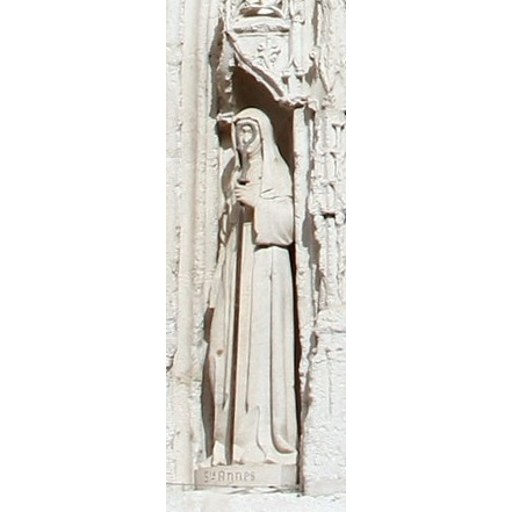
Codex; cropped by Rabanus Flavus
License: CC BY-SA 3.0
Agnes of Poitiers
Saint- Life Span
- d. 588
- Feast Day
- 13 May
- Gender
- female
- Church
- Catholic
Places
Relics & Where to Venerate
Location unknown
Agnes' relics are preserved in the Church of Saint Radegund; her tomb is a popular pilgrimage in the area
Roles & Family
Canonization
Biography
Agnes of Poitiers, also known as Agnes of Sainte-Croix, was a sixth-century abbess in Merovingian Gaul and a figure of local sanctity associated with the monastery of the Holy Cross at Poitiers. Almost nothing reliable is known of her birth, parentage, or early years. She enters the historical record as a younger companion of Radegund of Thuringia, the former queen who had been married to the Frankish king Chlothar I and who later withdrew from court life to pursue a monastic vocation. Radegund is described in contemporary and near-contemporary sources as having raised or otherwise taken charge of Agnes, and as having chosen her to govern the community she founded rather than assuming the office of abbess herself.
In the mid-sixth century Radegund established a monastery for women at Poitiers and obtained from the Byzantine emperor Justin II a relic of the True Cross, from which the house took its name, Sainte-Croix. The community lived according to the Rule of Caesarius of Arles, which Radegund secured for it. Agnes was consecrated abbess by Germanus, bishop of Paris, an event later recalled in verse by the Italian-born poet Venantius Fortunatus, who settled in Poitiers and became closely attached to both women. Under Agnes the monastery became a notable centre of female religious life in western Gaul. Fortunatus addressed numerous poems and letters to Agnes and to Radegund; these writings are the principal contemporary evidence for Agnes’s character and for the cultivated literary circle around Sainte-Croix. He presents her as Radegund’s devoted spiritual daughter and as a capable superior of the house.
Radegund died in 587. Agnes remained abbess after the foundress’s death and is generally reported to have died in the following year, 588. Surviving sources do not preserve a detailed account of her last months or of her burial. A later nun of the same monastery, Baudonivia, wrote a life of Radegund that sheds indirect light on the community Agnes had governed, but it is not a biography of Agnes herself. Veneration of Agnes developed in the local tradition of Poitiers and in some medieval calendars; her cult remained essentially regional. She is commemorated on 13 May in a number of later listings of saints. Precise dates of birth, family connections, and many particulars of her administration are not attested in the extant evidence, which rests chiefly on Fortunatus’s poetry, the hagiography of Radegund, and subsequent liturgical notices.