Agricola is a saint of the Catholic Church (630 - 700). Agricola's feast day is celebrated on September 2. Agricola is the patron saint of Avignon;against the plague.
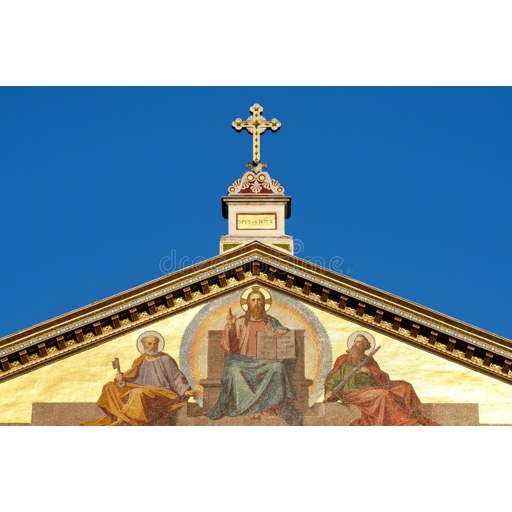
https://dreamstime.com/photos-images/saint-agricola.html
License: unknown
Agricola
Saint- Life Span
- 630 - 700 (age 70)
- Feast Day
- September 2
- Gender
- male
- Church
- Catholic
Places
Roles & Family
Religious Information
Patronage
Avignon;against the plague
Biography
Saint Agricola (also known as Agricol or Agricolus) was a seventh-century bishop of Avignon in Provence, in what is now southern France. Traditional hagiographical accounts, preserved in later medieval liturgical and local sources rather than in contemporary documents, place his birth in Avignon around 630. He is said to have belonged to a Gallo-Roman family of senatorial rank. His father, Magnus (Magne), who is also venerated as a saint, held public office before entering the clerical state and later becoming bishop of Avignon. Agricola received a careful education suited to his station and, while still a young man, entered the monastery of Lérins, the island abbey off the Provençal coast that had been a major center of monastic life and learning in Gaul since the fifth century.
After years in the cloister at Lérins, Agricola was recalled to Avignon to assist his father in the government of the diocese. Traditional chronology dates his own accession as bishop of Avignon to about 660. He is reported to have held the see for some four decades. Medieval writers credit him with an active pastoral program: the building and restoration of churches, the foundation of a house for women religious, care for the poor and the sick, and efforts to consolidate Christian practice in a region where older cults and rural custom had not entirely disappeared. One church associated with his episcopate later became the collegiate church that bears his name and served as a principal focus of his cult in the city.
A distinctive later legend attached to Agricola concerns an infestation of snakes in Avignon. According to this story, the bishop caused storks to gather and devour the serpents, thereby delivering the inhabitants. Whether the tale has any historical basis cannot be verified from early evidence, but it became a fixed element of his local memory and iconography; he is sometimes represented with a stork. In subsequent centuries the people of Avignon also invoked him in time of epidemic. His reputation as a protector of the city, especially against plague, grew in the later Middle Ages, when Avignon was for a time the residence of the popes and suffered severely from pestilence. From this devotion he came to be regarded as patron of Avignon and as a saint invoked against the plague.
Agricola died in Avignon, according to the received tradition on 2 September 700, and was buried in the city. The Collégiale Saint-Agricol, among the oldest churches of Avignon, became closely identified with his relics and cult. His feast is observed on 2 September. Like many episcopal saints of early medieval Gaul, he was never the subject of a formal papal canonization of the later medieval or modern type; veneration arose from diocesan and popular cult and was continued in the liturgy of Avignon and of the wider Church. Surviving evidence for the details of his life is limited and depends largely on later hagiography, but the cult of Saint Agricola in Avignon is historically well attested and has endured from the early Middle Ages to the present.