Alberto Ramento is a venerable of the Catholic Church (1936 - 2006).
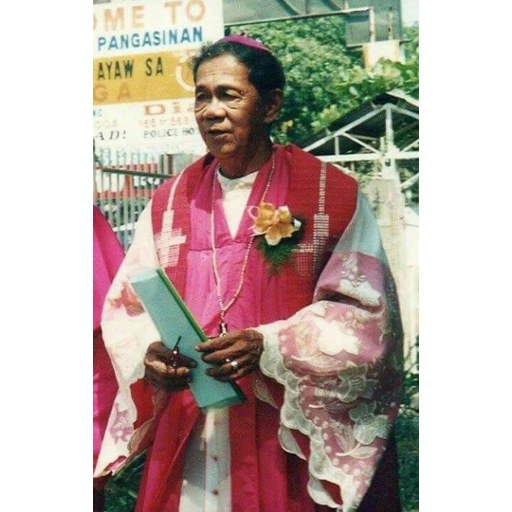
IFI Page Gallery
License: Public domain
Alberto Ramento
Venerable- Life Span
- 1936 - 2006 (age 70)
- Gender
- male
- Church
- Catholic
Places
Relics & Where to Venerate
Location unknown
The bodily remains of Alberto Ramento are a first-class relic. Venerated at Cavite City.
Roles & Family
Religious Information
Biography
Alberto Ramento was a Filipino bishop of the Iglesia Filipina Independiente (IFI), known in English as the Philippine Independent Church, a nationalist Catholic church that separated from Rome in the early twentieth century under the leadership of Gregorio Aglipay and other Filipino clergy. He served as the ninth Obispo Máximo, or Supreme Bishop, of that church from 1993 to 1999, the highest office in the IFI. After his term as Obispo Máximo he continued in episcopal ministry as Bishop of Tarlac. Ramento was known in the Philippines not only as a church leader but as an outspoken advocate for peasants, industrial workers, and human rights, and as a public critic of extra-judicial killings.
He was born in 1936 in Guimba, in the province of Nueva Ecija, then part of the Philippine Commonwealth. His entire ministry was spent in the IFI, whose clergy are permitted to marry; he was married to Celerina Ramento and they had children. In the 1990s and 2000s he became closely identified with ecumenical and social-justice work. He served as co-chairperson of the Ecumenical Bishops’ Forum and was associated with church networks that supported striking workers and rural communities. In Tarlac he was a prominent supporter of farm workers at Hacienda Luisita, a large sugar estate that was the scene of a major labor dispute and, in 2004, of a violent dispersal of strikers in which several people were killed. He also spoke against a pattern of killings of activists, journalists, and church workers that human rights groups attributed to state security forces during the administration of President Gloria Macapagal Arroyo, and he had received death threats related to that advocacy.
On 3 October 2006 Ramento was found dead in the convento, or rectory, attached to the IFI cathedral in Tarlac City. He had been stabbed numerous times. Philippine police treated the case as a robbery with homicide, noting that some items were reported missing. His family, the IFI hierarchy, and Philippine and international human rights organizations rejected that explanation. They pointed to the threats he had received, his public stance on Hacienda Luisita and on extra-judicial killings, and the broader context of violence against church people and activists. The murder was condemned by the World Council of Churches and by other ecumenical bodies. No one was ever brought to justice in a manner accepted by his family and by human rights monitors.
Within the Iglesia Filipina Independiente and among Philippine human rights advocates, Ramento is remembered as a martyr of the church of the poor. Annual commemorations have been held on the anniversary of his death. He was not a bishop of the Roman Catholic Church, was never pope or patriarch of an Eastern see, and has not been the subject of a Roman Catholic beatification or canonization process. His historical significance lies in the life of the independent Philippine church and in the record of church involvement in social struggles in the Philippines in the late twentieth and early twenty-first centuries.