Albin is a saint of the Catholic Church (d. 550). Albin's feast day is celebrated on 1 March. Albin is the patron saint of Angers;against piracy;against kidnapping;prisoners;captives.
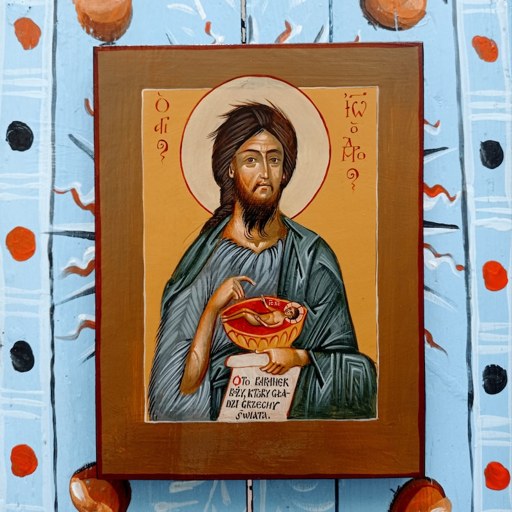
https://www.etsy.com/uk/listing/1518487637/saint-john-the-baptist-picture-icon
License: unknown
Albin
Saint- Life Span
- d. 550
- Feast Day
- 1 March
- Gender
- male
- Church
- Catholic
Places
Roles & Family
Patronage
Angers;against piracy;against kidnapping;prisoners;captives
Biography
Saint Albinus, known in French as Saint Aubin, was a sixth-century monk and bishop of Angers in western Gaul. He was born in the later fifth century to a noble family in Armorica, in the region of the Veneti around Vannes in Brittany. Drawn early to the ascetic life, he entered the monastery of Tincillac (Tincillacum), a house in the country associated with Angers. There he became known for fasting, prayer, and care for the poor. After many years in the community he was chosen abbot, and he is traditionally said to have governed the monastery for about a quarter of a century before the clergy and people of Angers elected him bishop, an election usually dated to 529.
As bishop he kept the habits of a monk and became especially noted for charity and for ransoming captives taken in the wars and coastal raids of the early Merovingian age. He attended the Councils of Orléans in 538 and 541, at which the Frankish episcopate dealt with discipline and church order. Near-contemporary tradition, later written up by Gregory of Tours, remembered him as a wonder-worker and as a stern opponent of incestuous and otherwise irregular unions among the powerful, a stance that brought him into conflict with some members of the aristocracy. The principal narrative source for his life is the Vita Sancti Albini composed soon after his death by Venantius Fortunatus, the Italian poet who settled in Gaul, at the request of Bishop Domitianus of Angers.
Albinus died at Angers on 1 March, in the year generally given as 550. He was first buried in the church of Saint Peter at Angers; his cult grew quickly, and his relics were later associated with the monastic church that took his name, the abbey of Saint-Aubin. His feast on 1 March was widely kept in France and appeared in other Western calendars. He is invoked as patron of the city and diocese of Angers. Popular devotion has long linked him with protection against pirates and kidnappers and with the liberation of prisoners, in keeping with the ransom stories attached to his episcopate. Numerous French parishes and communes called Saint-Aubin preserve his name, and his cult remained especially strong in Anjou and Brittany throughout the Middle Ages.