Aleksander Woźny is a servant of god of the Catholic Church (1910 - 1983).
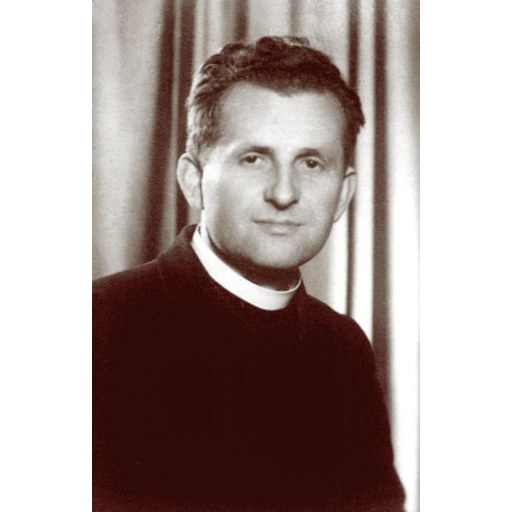
fotograf nieznany
License: Public domain
Aleksander Woźny
Servant of God- Life Span
- 1910 - 1983 (age 73)
- Gender
- male
- Church
- Catholic
Places
Roles & Family
Biography
Aleksander Woźny was a Polish Roman Catholic diocesan priest of the Archdiocese of Poznań. He was born on 15 December 1910 in Poznań, a historically Polish city that at the time of his birth lay within the German Empire. He received his formation at the archdiocesan seminary in Poznań and was ordained to the priesthood in 1935. His first years of ministry were spent in ordinary parish work in Greater Poland in the last years of the Second Polish Republic, immediately before the German invasion of September 1939.
Like a great many Polish clergy, Woźny was targeted by the Nazi occupation. He was arrested and sent to the Dachau concentration camp in Bavaria, which held a large population of Polish priests under extremely harsh conditions. Numerous fellow clergy died in the camp. Woźny survived internment and was liberated at the end of the war. He then returned to Poznań and resumed priestly service in his home archdiocese under the new communist authorities of postwar Poland.
In the following decades he was known as a pastor, confessor, and spiritual guide. For a long period he served as parish priest of the church of Saint John of Kanty (św. Jana Kantego) in Poznań, where he was remembered for preaching, the sacrament of reconciliation, and availability to the faithful despite political restrictions on the Church. Those who knew him described a life of prayer, simplicity, and pastoral zeal rather than public prominence or high ecclesiastical office.
Woźny died in Poznań on 21 August 1983. A reputation for holiness persisted among the local faithful. In the twenty-first century the Archdiocese of Poznań opened a diocesan inquiry into his life and virtues, and he is recognized in the Catholic Church as a Servant of God. He has not been beatified or canonized, and no feast day or official patronages have been assigned. The cause remains at an early stage, and publicly available biographical detail beyond his dates, ordination, wartime imprisonment, and long Poznań pastorate is limited.