Alexander Akimetes is a venerable of the Catholic Church (d. 430). Alexander Akimetes's feast day is celebrated on 15 January; 3 July.
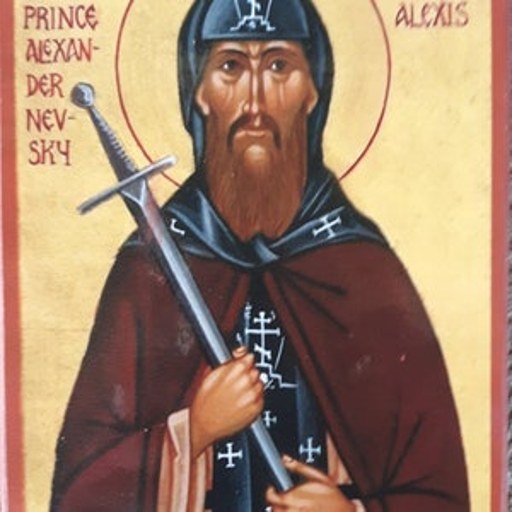
https://www.etsy.com/market/saint_alexander_icon
License: unknown
Alexander Akimetes
Venerable- Life Span
- d. 430
- Feast Day
- 15 January; 3 July
- Gender
- male
- Church
- Catholic
Places
Roles & Family
Religious Information
Biography
Saint Alexander Akimetes, also known as Alexander the Acoemete or Alexander the Sleepless (Greek: Alexandros ho Akoimetos), was a monk of the Eastern Roman Empire in the late fourth and early fifth centuries and the founder of the Acoemetae (Akoimetoi), a monastic brotherhood named for its practice of unceasing liturgical prayer. Surviving accounts, which rest chiefly on a fifth-century Life whose historical core is generally accepted even while many episodes are treated with caution, place his birth in the Roman province of Asia in western Asia Minor, in a family of some standing. He received a classical education at Constantinople and as a young man entered imperial military service, serving for several years as an officer before abandoning that career.
According to the hagiographical tradition, a reading of the Gospel—especially the counsel to sell one’s possessions and follow Christ—led him to dispose of his property and seek the monastic life in Syria. There he attached himself to an abbot named Elias, lived as a monk, and later as a wandering ascetic and missionary. He is said to have preached in Mesopotamia and the Syrian desert, to have worked among the rural population around Palmyra, and to have gathered disciples with whom he instituted psalmody maintained without interruption by successive choirs. That sleepless office became the distinctive mark of his foundations and the source of his epithet Akimetes.
Alexander’s zeal brought him into repeated conflict with ecclesiastical and civil authorities. After time at Antioch he made his way to the region of Constantinople, where in the 420s he established a monastery of the Acoemetae, first at Gomon on the Asian shore near the mouth of the Black Sea and later at Irenaion on the Bosphorus. The community grew rapidly and attracted both admiration and suspicion. He was accused of Messalian tendencies, a charge often directed at monks who emphasized unceasing prayer, and was for a time expelled from the capital; Nestorius, during his patriarchate, is reported to have opposed him.
He died about the year 430, almost certainly in or near Constantinople at one of his monasteries. The Acoemetae continued under successors including John and the better-documented abbot Marcellus, and their tradition of continuous liturgical recitation influenced later Constantinopolitan monasticism, including the monastery of Stoudios. Alexander is commemorated as a saint in both East and West: on 15 January in the Western martyrological tradition associated with the Bollandists, and on 3 July in the Byzantine liturgical calendar. Precise details of his birth, the chronology of his travels, and the circumstances of his death remain uncertain.