Alexander of Constantinople is a saint of the Catholic Church (d. 337). Alexander of Constantinople's feast day is celebrated on 30 August.
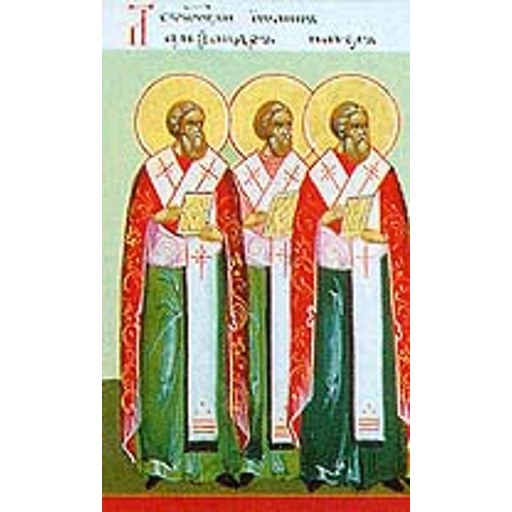
Unknown authorUnknown author
License: Public domain
Alexander of Constantinople
Saint- Life Span
- d. 337
- Feast Day
- 30 August
- Gender
- male
- Church
- Catholic
Places
Roles & Family
Biography
Alexander was bishop of Byzantium and of Constantinople in the first half of the fourth century, during the reign of the emperor Constantine. He is counted in the episcopal succession of that city and, in later Orthodox lists, among the patriarchs of Constantinople, although in his own lifetime the see was still canonically dependent on Heraclea in Thrace and had not yet received the honorary rank later associated with the imperial capital. He followed Metrophanes in office. Ancient historians differ on the exact transition: some present Alexander as already acting as bishop at the First Council of Nicaea in 325, while later tradition holds that the elderly Metrophanes sent him to the council as representative and that Alexander fully succeeded only after Metrophanes’s death. In either reconstruction he was the hierarch of the city when Constantine dedicated his new capital in 330 and when the local church began its rapid rise in imperial importance. Contemporary narrative depends chiefly on the fifth-century church historians Socrates Scholasticus, Sozomen, and Theodoret, together with notices in Athanasius.
The defining public struggle of his episcopate was the Arian controversy. Alexander belonged to the Nicene party and is described as a firm opponent of Arius and of those who denied the full divinity of the Son. At Nicaea he stood with Alexander of Alexandria and the young deacon Athanasius. After the council, when imperial policy shifted and Constantine recalled Arius from exile, the emperor directed that Arius be received again into the church of Constantinople. Alexander refused to communicate with him. Fifth-century sources relate that the bishop spent the night in prayer in the church (Hagia Irene, then the cathedral), asking that he himself might be removed from this life rather than see the congregation forced into communion with Arius, and that Arius died abruptly in Constantinople in 336 before the planned reconciliation could take place. Nicene writers treated the death as a providential deliverance; the episode became a standard element in later anti-Arian historiography and in the saint’s legend.
Beyond this conflict, fourth- and fifth-century sources give only a thin outline of his life. They do not record a birthplace, parentage, or year of birth. Byzantine liturgical texts of a much later date assert that he was a native of Calabria in southern Italy, the son of George and Vryaine, a man trained in philosophy who was ordained to the presbyterate in Byzantium and who lived to an extreme old age. Those claims remain unverified by contemporary evidence and belong to the hagiographical portrait rather than to recoverable biography. What can be said with more confidence is that he enjoyed a reputation for personal holiness and that his tenure, conventionally reckoned by later chronographers at about twenty-three years, spanned the years in which Byzantium became Constantinople.
Alexander died in 337, the year of Constantine’s own death. Socrates states that after Alexander’s death the Nicene community of the capital chose Paul as bishop, while an opposing faction supported Macedonius, inaugurating a series of depositions and riots that lasted well into the reign of Constantius II. Alexander was commemorated as a saint from an early period. In the Eastern Orthodox calendar he is remembered on 30 August together with later patriarchs of Constantinople named John and Paul. He was not Bishop of Rome, nor is he associated with a later religious order. His historical significance lies in his place at the head of the Constantinopolitan succession and in his role in the first generation of the Arian crisis in the new imperial city.