Alexander (Trapitsyn) is a saint of the Eastern Orthodox Church (1862 - 1938). Alexander (Trapitsyn)'s feast day is celebrated on 1 January.
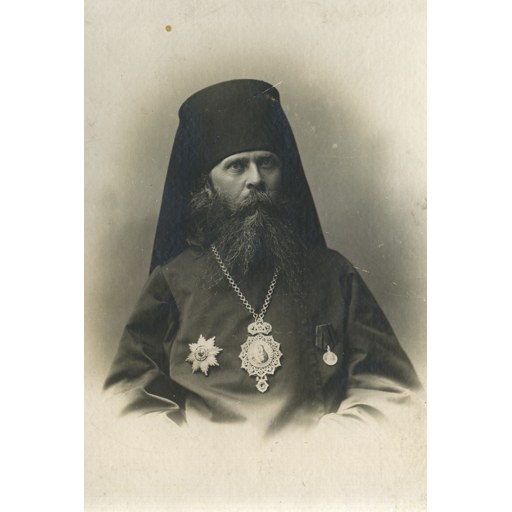
Unknown authorUnknown author
License: Public domain
Alexander (Trapitsyn)
Saint- Life Span
- 1862 - 1938 (age 76)
- Feast Day
- 1 January
- Gender
- male
- Church
- Eastern Orthodox
Places
Roles & Family
Canonization
Biography
Alexander (Trapitsyn), born Alexander Ivanovich Trapitsyn, was a hierarch of the Russian Orthodox Church and is venerated as a New Hieromartyr of the twentieth century. He was born on 29 August 1862 in the village of Vyatskoye, in Vyatka Uyezd of Vyatka Governorate, into the family of a church psalm-reader. After completing the Vyatka Theological Seminary he studied at the Kazan Theological Academy, graduating in 1888 with the degree of candidate of theology. In June of that year he was ordained to the priesthood and assigned to the Annunciation Cathedral in Vyatka. He then spent many years in theological education, serving as a teacher at the Vyatka Theological School, as inspector of the Vyatka Theological Seminary, and later as rector of that seminary with the rank of archpriest. He also served as rector of the Volyn Theological Seminary.
In 1904 he received the monastic tonsure and was raised to the rank of archimandrite. The same year he was consecrated to the episcopate and began a long career as a vicar bishop and later as a diocesan hierarch. He occupied a succession of sees in the late imperial and early Soviet periods. In 1928 he was appointed Archbishop of Samara, the Volga city that in the 1930s was renamed Kuibyshev. During the years of Soviet anti-religious policy he remained with the canonical Moscow Patriarchate rather than joining the renovationist schism.
Archbishop Alexander was arrested more than once in the 1920s and 1930s. His final arrest took place in 1937, at the height of the Great Terror. Condemned by an NKVD troika, he was shot on 14 January 1938 in Kuibyshev. The place of his burial is unknown, as was typical for those executed in that campaign.
The Russian Orthodox Church glorified him as a hieromartyr at the Jubilee Bishops’ Council of 2000, together with the host of New Martyrs and Confessors of Russia. His principal feast is kept on 1 January according to the Julian calendar, corresponding to the date of his death in the Church’s liturgical reckoning. He is also commemorated in the Synaxis of the New Martyrs and Confessors of Russia and in the Synaxis of the Saints of Samara.