Alexander Vochskiy is a venerable of the Catholic Church. Alexander Vochskiy's feast day is celebrated on 30 March.
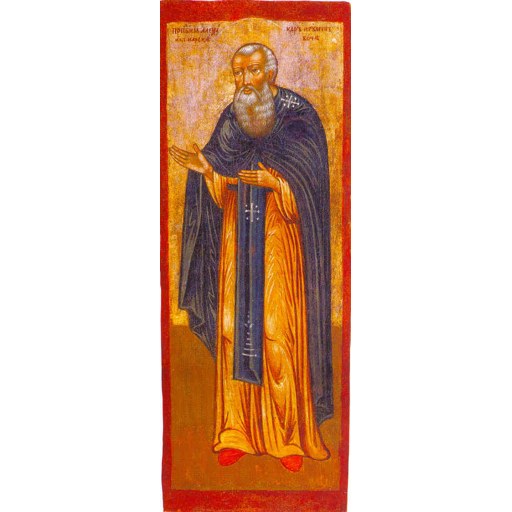
AnonymousUnknown author
License: Public domain
Alexander Vochskiy
Venerable- Feast Day
- 30 March
- Gender
- male
- Church
- Catholic
Places
Roles & Family
Biography
Venerable Alexander Vochsky, also known as Alexander of Voch or Alexander of Galich, was a Russian Orthodox monastic saint who lived in the sixteenth century. Almost nothing is recorded of his early life, parentage, or the year of his birth. He is remembered principally as a hermit and monastic founder in the Galich region of the Tsardom of Russia, in territory that now belongs to Kostroma Oblast.
Alexander settled on the Vocha River, a tributary in the Volga river system, in what was then Galich uezd. There he established a hermitage that attracted disciples and developed into a monastery later called the Alexander-Vochsky Monastery, associated with a church of the Nativity of the Theotokos. He served as the community’s founder and first abbot. The form of life he instituted belonged to the tradition of northern Russian monasticism, combining solitude, liturgical prayer, and manual labor in a forested, relatively remote setting.
No contemporary vita of Alexander has survived, and later notices are brief. Such paucity of biographical detail is characteristic of many locally venerated monastic founders of the sixteenth century, whose memory was kept by synodika, liturgical calendars, and the oral tradition of their houses rather than by extensive written lives. The monastery he founded persisted until it was closed in 1764 in the course of the secularization of monastic property carried out under Empress Catherine II. According to tradition, his relics remained in the monastery church.
The Russian Orthodox Church commemorates Alexander Vochsky on 30 March and also among the saints of the Synaxis of Kostroma. His cult has remained largely regional. He is honored as one of the ascetics who helped plant Orthodox monasticism in the wooded districts northeast of Moscow. Beyond these facts, the historical record does not permit a more detailed reconstruction of his life, teachings, or the exact circumstances of his death.