Alfred the Great is a saint of the Catholic Church (849 - 899). Alfred the Great's feast day is celebrated on 26 October. Alfred the Great is the patron saint of learning.
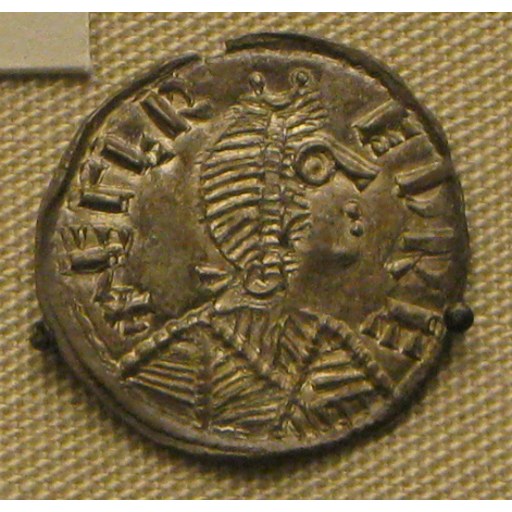
User:Saforrest
License: CC BY-SA 3.0
Alfred the Great
Saint- Life Span
- 849 - 899 (age 50)
- Feast Day
- 26 October
- Gender
- male
- Church
- Catholic
Places
Relics & Where to Venerate
Location unknown
The bodily remains of Alfred the Great are a first-class relic. Venerated at Winchester.
Roles & Family
Religious Information
Patronage
learning
Biography
Alfred was born in 849 at the royal estate of Wantage in Berkshire, the youngest son of King Æthelwulf of Wessex and his wife Osburh. Several older brothers preceded him on the West Saxon throne, among them Æthelbald, Æthelberht, and Æthelred. As a boy he was sent to Rome, where Pope Leo IV is reported by the later biographer Asser to have invested him with consular insignia; he afterwards accompanied his father on a second journey to the city. Those early contacts with papal Rome and with Latin Christian culture left a lasting mark and help to explain the educational and religious programme of his mature reign. In 868 he married Ealhswith, daughter of the Mercian noble Æthelred Mucel, an alliance that tied Wessex more closely to Mercia while both kingdoms faced the Viking force later known as the Great Heathen Army.
He became king of Wessex in 871, in the midst of a military crisis. King Æthelred died after a sequence of engagements with the Danish army, including the Battle of Ashdown, in which Alfred already played a conspicuous part. The first years of the new reign brought further fighting, payments, and fragile truces. In 878 the Danish leader Guthrum struck the royal estate at Chippenham in midwinter. Alfred withdrew into the Somerset marshes, established a base at Athelney, and carried on a guerrilla war until, in the spring, he gathered the fyrds of Somerset, Wiltshire, and Hampshire and defeated Guthrum at Edington. The Danes were driven to their fortress and compelled to come to terms. Guthrum accepted baptism, with Alfred as sponsor, and a territorial settlement left Wessex and western Mercia under English rule while Danish control hardened in the east and north, the region later called the Danelaw.
In the following decades Alfred reorganised the defence of his kingdom. He developed a network of fortified burhs so disposed that no part of Wessex was far from a garrisoned stronghold, sought to keep a field force available, and built ships intended to meet Scandinavian raiders at sea. He issued a law book that drew on earlier West Saxon, Mercian, and Kentish legislation as well as on biblical and Christian precept, presenting the king as guardian of justice and of Christian order. After London was recovered in 886 he was acknowledged as overlord by the English outside Danish rule and used in charters the style of king of the Anglo-Saxons rather than merely of the West Saxons, a step toward a wider English kingship later extended by his son Edward and his grandson Æthelstan.
Alfred’s standing as a learned ruler rests on a deliberate programme of vernacular education and translation. Concerned by the collapse of Latin literacy after years of war, he gathered scholars from Mercia, Wales, and the Continent, including Asser, Plegmund, Wærferth, and Grimbald. He promoted Old English versions of works he judged most needful, among them Gregory the Great’s Pastoral Care, Boethius’s Consolation of Philosophy, Augustine’s Soliloquies, and the first fifty Psalms; other translations connected with his court include Orosius and, in some assessments, Bede’s Ecclesiastical History. Prefaces issued in his name argue that wisdom and the tools of literacy were necessary to the governance of a Christian people. The keeping of the Anglo-Saxon Chronicle was encouraged in the same milieu. These efforts, together with the military and legal reforms, underlie the later epithet the Great, unique among English monarchs.
Alfred died on 26 October 899 and was buried at the Old Minster in Winchester; his body was later translated to the New Minster and in the twelfth century to Hyde Abbey. He was succeeded by his son Edward the Elder. His daughter Æthelflæd became Lady of the Mercians and a principal figure in the reconquest of Danish Mercia; Ælfthryth married Count Baldwin II of Flanders; Æthelgifu became abbess of Shaftesbury, a house he had founded; another son, Æthelweard, received a learned upbringing. Although he was never the object of a formal papal canonisation of the later medieval type, he came to be venerated as a saint in England, with a feast on 26 October, and is commemorated in the calendar of the Church of England and in some other Christian traditions. Historians still discuss the reliability of Asser on particular points and the exact share of Alfred’s own hand in the translations, but the main outline of the reign—the survival of Wessex, the building of a more resilient kingdom, and the patronage of English learning—is firmly grounded in contemporary and near-contemporary evidence.