Aloysius Stepinac is a blessed of the Catholic Church (1898 - 1960). Aloysius Stepinac's feast day is celebrated on 10 February.
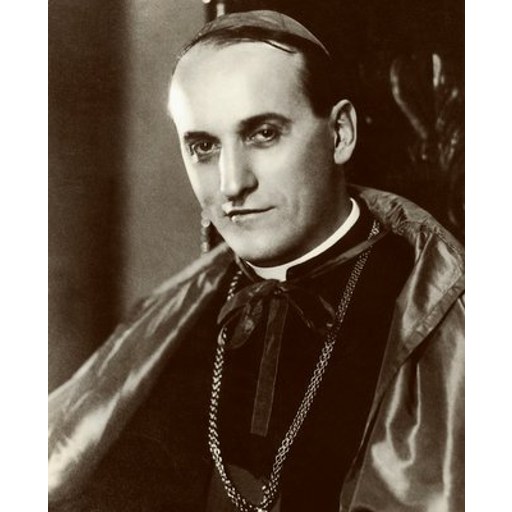
Unknown authorUnknown author
License: Public domain
Aloysius Stepinac
Blessed- Life Span
- 1898 - 1960 (age 62)
- Feast Day
- 10 February
- Gender
- male
- Church
- Catholic
Places
Relics & Where to Venerate
Location unknown
The bodily remains of Aloysius Stepinac are a first-class relic. Venerated at Zagreb Cathedral.
Roles & Family
Canonization
Biography
Aloysius Viktor Stepinac was born on 8 May 1898 in the village of Brezarić, near Krašić, in the Kingdom of Croatia-Slavonia, then part of Austria-Hungary. He came from a large farming family and was one of eight children. After secondary schooling he was conscripted into the Austro-Hungarian army during the First World War, served on the Italian front, and spent time as a prisoner of war. In the new Kingdom of Serbs, Croats and Slovenes he first studied agriculture, then entered priestly formation. He completed philosophy and theology in Rome at the Pontifical Gregorian University while residing at the Pontifical Germanic-Hungarian College, and was ordained a priest in 1930. After pastoral service in the Archdiocese of Zagreb he was named coadjutor archbishop of Zagreb in 1934, at the unusually young age of thirty-six, and succeeded as metropolitan archbishop in 1937. He remained a diocesan cleric rather than a member of a religious order.
As Archbishop of Zagreb he led the Catholic Church in Croatia through the Second World War and the Independent State of Croatia, the Ustaše-ruled satellite of Nazi Germany and Fascist Italy. He initially welcomed the appearance of a Croatian state after long foreign rule, but he also protested racial legislation and mass violence against Serbs, Jews, Roma, and political opponents. He intervened in individual cases, helped some Jews and others to find shelter, and in sermons and pastoral letters condemned racial ideology and killing. Historians continue to dispute how early, how public, and how consistent that opposition was, and forced conversions of Orthodox Serbs remain a central point of controversy. After the war the communist government of Josip Broz Tito had him arrested. In 1946 he was tried for collaboration and war crimes, convicted, and sentenced to sixteen years. Outside Yugoslavia the proceedings were widely judged a politically staged show trial; the Holy See and many Western governments rejected the verdict.
Stepinac served part of the sentence at Lepoglava prison and in 1951 was released to closely supervised house arrest in Krašić. Pope Pius XII created him a cardinal in 1953, a sign of Roman support that Belgrade treated as a diplomatic affront; he was never allowed to go to Rome for the consistory. He remained confined in Krašić, celebrating Mass and corresponding under restriction, until his death on 10 February 1960. Later examination of his remains has been cited by some as consistent with chronic poisoning; that reading is not universally accepted. He was buried in Zagreb Cathedral.
Pope John Paul II beatified him as a martyr on 3 October 1998 at the Marian shrine of Marija Bistrica in Croatia. The beatification, and the still unfinished cause for canonization, are sharply contested. Supporters present him as a bishop who resisted both fascist and communist totalitarianism and who suffered imprisonment for the Church. Critics, especially in Serbia and among some Jewish organizations, hold that his wartime record does not meet the standard of heroic virtue or martyrdom. The Holy See has maintained that he opposed totalitarian crimes and was punished for his office and faith. His liturgical memorial is kept on 10 February.