Amadeus of Portugal is a blessed of the Catholic Church (1420 - 1482). Amadeus of Portugal's feast day is celebrated on 10 August.
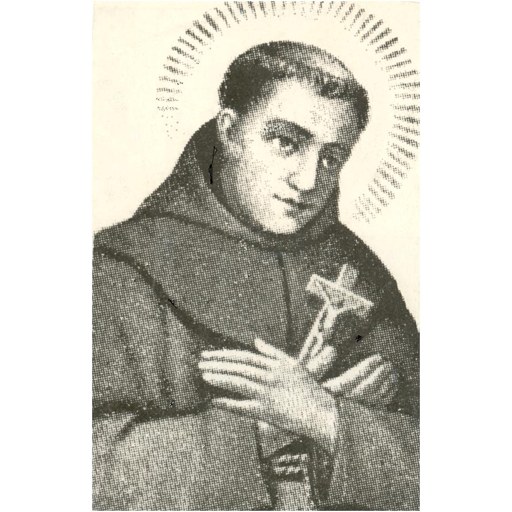
Unknown authorUnknown author
License: Public domain
Amadeus of Portugal
Blessed- Life Span
- 1420 - 1482 (age 62)
- Feast Day
- 10 August
- Gender
- male
- Church
- Catholic
Places
Relics & Where to Venerate
Location unknown
The bodily remains of Amadeus of Portugal are a first-class relic. Venerated at Santa Maria della Pace.
Roles & Family
Religious Information
Biography
Amadeus of Portugal, born João de Menezes da Silva (also rendered João Mendes de Silva), was a fifteenth-century Portuguese nobleman who became a Hieronymite monk and later a Franciscan friar, and who is remembered as the founder of a strict reform congregation within the Order of Friars Minor known as the Amadeans or Amadeites. He was born about 1420 at Ceuta, then a recently conquered Portuguese stronghold on the North African coast, the son of Rui Gomes da Silva, alcaide of Campo Maior, and Isabel de Menezes, a daughter of Pedro de Menezes, Count of Vila Real and a leading figure in the Portuguese administration of Ceuta after 1415. Through both parents he belonged to the high nobility of the Portuguese court. Among his siblings was Beatrice of Silva, later canonized, who founded the Order of the Immaculate Conception. In religion he took the name Amadeus (Amadeu), “lover of God.”
As a young man of his rank he was associated with court life in Portugal before turning toward a religious vocation. In the middle decades of the fifteenth century he left Portugal for the Iberian interior and entered the Hieronymite monastery of Santa María de Guadalupe in Extremadura. Finding that community unsuited to the form of life he sought, he left it and for a time lived in solitude. He subsequently joined the Franciscans, received priestly ordination, and embraced a severe interpretation of the Rule of Saint Francis. Seeking a setting in which a more rigorous observance could take root, he traveled to Italy, where the Observant movement was already active and where he found support among both friars and secular patrons.
In Italy, under the favor of Pope Sixtus IV—who was himself a Franciscan—Amadeus was able to establish a network of houses committed to poverty, prayer, and a distinctive penitential discipline. These communities, concentrated especially in Lombardy and in the Papal States, came to be called Amadeans after their founder. He enjoyed the protection of the Sforza dukes of Milan and founded or reformed several convents, among them a house in Milan associated with his final years. He was regarded in his lifetime as a preacher, reformer, and man of prayer. Later tradition also credited him with mystical experiences and prophetic writings; the principal text long circulated under his name, the Apocalypsis Nova, is now generally held by scholars to have been composed or compiled after his death rather than by Amadeus himself.
Amadeus died in Milan on 10 August 1482. The congregation he founded continued for several decades and was eventually absorbed into the wider Observant Franciscan family in the later sixteenth century, when Pope Pius V suppressed a number of smaller Franciscan reform groups. He has been popularly venerated as blessed, particularly within Franciscan circles, though he was not the subject of a formal modern canonization or a clearly documented papal beatification of the later ceremonial type. His memory is customarily kept on 10 August, the date of his death. Historical sources for his life are uneven, mixing contemporary notices with later hagiographic elaboration, and several details of his early career, the exact chronology of his moves between Portugal, Castile, and Italy, and the inner history of his reform remain imperfectly documented.