Ambrose of Cahors is a saint of the Catholic Church.
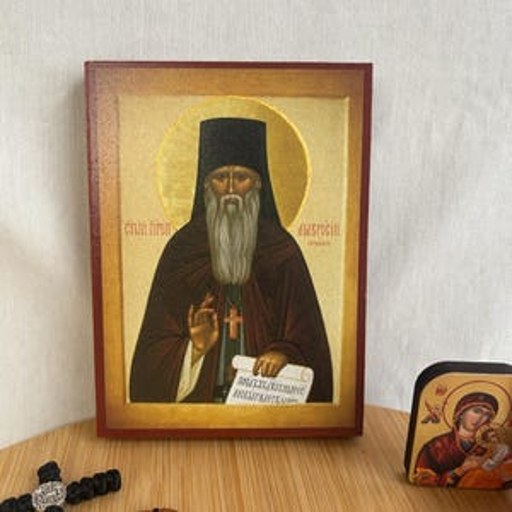
https://etsy.com/market/ambrose_icon
License: unknown
Ambrose of Cahors
Saint- Gender
- male
- Church
- Catholic
Roles & Family
Biography
Ambrose of Cahors remains an obscure figure in the history of the Christian Church in southwestern France. Standard historical and hagiographical sources provide no securely attested details concerning his life, ministry, or death. The episcopal see of Cahors, known in antiquity as Cadurcum, possessed a succession of bishops from late Roman times, several of whom were later honored as saints, most notably Desiderius in the seventh century. Ambrose, however, does not appear in the better-documented catalogues of that succession, nor does a substantial vita or set of miracles survive that would allow historians to place him in a particular century with confidence.
The region of Quercy, of which Cahors was the principal city, saw the development of monastic houses and a local liturgical tradition during the early Middle Ages. It is possible that a cleric named Ambrose was remembered in a purely local calendar or necrology, yet no such document has been identified and published in the major collections of medieval liturgical sources. Later compilers of saints’ lives occasionally included names drawn from fragmentary or secondary lists, and it is not uncommon for such entries to lack independent corroboration. Consequently, claims that Ambrose served as bishop, monk, or martyr cannot be verified.
Because of this paucity of evidence, it is impossible to determine whether Ambrose of Cahors was born in the city itself or merely associated with it through office or burial. No reliable information exists regarding his family, education, or any writings he may have produced. Likewise, no feast day is consistently assigned to him in the Roman Martyrology or in the principal medieval martyrologies of Gaul, and no patronage of places, professions, or causes can be documented. Any cult that may once have existed appears to have been of limited duration and geographic scope.
Modern scholarship on the Church in Aquitaine and the Midi therefore treats Ambrose of Cahors, if the name is not simply a later confusion with another saint, as a figure whose historical existence cannot at present be confirmed. Further research in unpublished cartularies, necrologies, or local archival material from the Lot department might one day shed light on this individual, but until such evidence comes to light, a cautious historian must leave the biography essentially blank.