Amphilochius of Pochayiv is a venerable of the Catholic Church (1894 - 1971). Amphilochius of Pochayiv's feast day is celebrated on 1 January; 12 May.
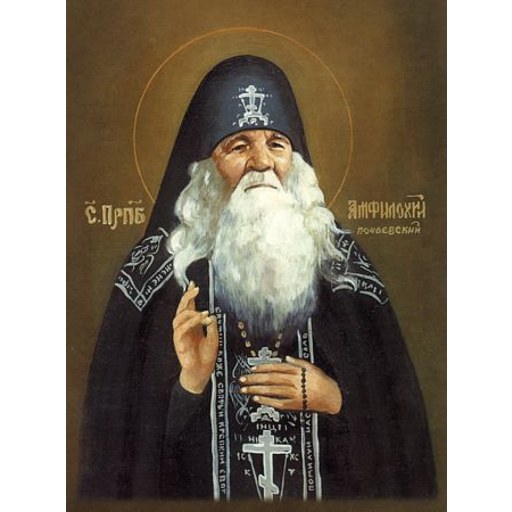
Unknown authorUnknown author
License: Public domain
Amphilochius of Pochayiv
Venerable- Life Span
- 1894 - 1971 (age 77)
- Feast Day
- 1 January; 12 May
- Gender
- male
- Church
- Catholic
Places
Relics & Where to Venerate
Location unknown
The bodily remains of Amphilochius of Pochayiv are a first-class relic. Venerated at Pochaiv.
Roles & Family
Religious Information
Canonization
Biography
Amphilochius of Pochayiv was born Yakov Varnavovich Holovatyuk on 27 November 1894 in the village of Mala Ilovytsia in the Volhynian Governorate of the Russian Empire, in territory that is now Ternopil Oblast, Ukraine. He belonged to a pious peasant family; his father Varnava was a church singer. From youth he was described as quiet, prayerful, and drawn to church life. During the First World War he was conscripted into the Imperial Russian Army and served as a medical orderly, an experience that brought him into close contact with the wounded and the dying. After the war, Volhynia came under Polish administration. In 1925 he entered the Holy Dormition Pochayiv Lavra as a novice.
He was tonsured a monk with the name Joseph in 1932 and was later ordained hierodeacon and then hieromonk. In due course he received the great schema and the name Amphilochius. Living at the lavra, he became known as a starets: pilgrims sought him for confession, counsel, and prayer for healing. Accounts from the period attribute to him gifts of discernment and the relief of grave physical and spiritual afflictions, including conditions described as demonic possession and severe mental illness. He received the sick in his cell and in the monastery precincts, and his reputation spread well beyond the lavra.
Soviet authorities treated his popularity as a threat, especially during the anti-religious campaigns of the Khrushchev years. In 1962 he was forcibly taken from the monastery and confined for several months in a psychiatric hospital, a method then often used against clergy and elders. After his release he lived for a time in his native village, where people continued to come to him, before returning to Pochayiv. Despite surveillance he maintained a ministry of prayer and healing until the end of his life.
He died on 1 January 1971 and was buried in the monastic cemetery of the lavra. After the end of Soviet rule, veneration increased. On 12 May 2002 the Ukrainian Orthodox Church (Moscow Patriarchate) glorified him as a saint; his relics, reported as incorrupt, were uncovered and enshrined at the Pochayiv Lavra, where they remain a focus of pilgrimage. He is commemorated on 1 January, the day of his repose, and on 12 May, the day of his glorification, and is remembered as a twentieth-century monastic elder who combined ascetic life with care for the suffering under persecution.