Ananias is a saint of the Catholic Church. Ananias's feast day is celebrated on 25 January; 1 October.
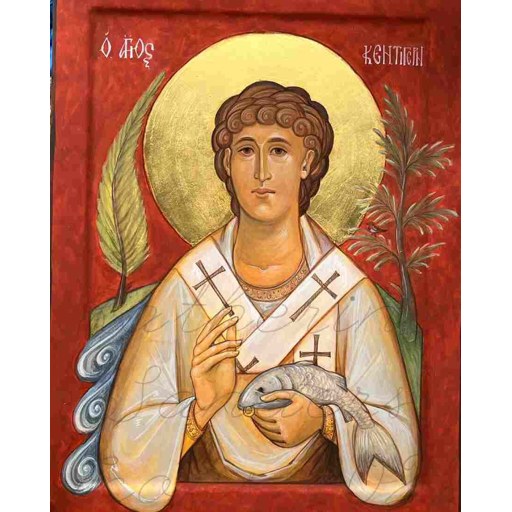
https://katherinesandersicons.com/blog/the-annunciation-icon-a-unique-commission
License: unknown
Ananias
Saint- Feast Day
- 25 January; 1 October
- Gender
- male
- Church
- Catholic
Roles & Family
Biography
Ananias of Damascus is known principally from the New Testament Acts of the Apostles as the Christian disciple who, at the command of the risen Christ, restored the sight of Saul of Tarsus and baptized him. According to Acts 9, Ananias was living as a disciple in Damascus when the Lord addressed him in a vision and instructed him to go to the house of Judas on the street called Straight, where he would find Saul, who had been blinded on the road to Damascus. Ananias at first objected, citing Saul’s notorious campaign against the followers of Jesus in Jerusalem and the authority he carried from the chief priests to bind Christians in Damascus. The Lord replied that Saul was a chosen instrument to carry the name of Jesus before Gentiles, kings, and the people of Israel, and that Saul would suffer for that name. Ananias then went, laid his hands on Saul, and addressed him as brother, saying that Jesus who had appeared to Saul on the road had sent him so that Saul might regain his sight and be filled with the Holy Spirit. Something like scales fell from Saul’s eyes; he was baptized and took food.
In Paul’s later speech to the crowd in Jerusalem, recorded in Acts 22, Ananias is described as a devout man according to the Law, well spoken of by all the Jews living in Damascus. That notice is the only New Testament characterization of Ananias’s standing in the local Jewish community and suggests that the earliest Damascus Christians remained closely identified with synagogue life. The canonical narrative ends with Ananias’s role in Paul’s conversion; Scripture does not record Ananias’s origin, family, later ministry, or death. No contemporary extra-biblical source supplies a birth year, birthplace, or date of death, and those details therefore remain unknown.
Later Christian tradition, especially in the Greek East, numbered Ananias among the Seventy Apostles and presented him as the first bishop of Damascus. Hagiographical accounts state that after baptizing Paul he preached the Gospel, was arrested, and was put to death by stoning. The Roman Martyrology commemorates him on 25 January, the same date as the Conversion of Saint Paul, and records the tradition of his martyrdom by stoning. In the Byzantine liturgical calendar he is commemorated on 1 October as the holy apostle Ananias of the Seventy. These commemorations reflect the Church’s memory of him as the man who received the former persecutor into the Christian community, but they do not rest on documents that would allow a historian to fix the year or place of his death with confidence.
Because the biblical text is silent on Ananias’s later career, medieval and early modern lives filled the gap with varying local traditions, including associations with preaching beyond Damascus. None of those expansions can be verified from first-century evidence. What remains historically secure is the Damascus episode itself and the figure of a law-observant Jewish Christian who, despite fear of Saul’s reputation, obeyed the vision and became the instrument of Paul’s baptism. In Christian theology and art he therefore stands as a type of obedience and of the Church’s welcome of the convert, rather than as a figure whose biography can be reconstructed in detail.