Anatole de Bengy is a servant of god of the Catholic Church (1824 - 1871).
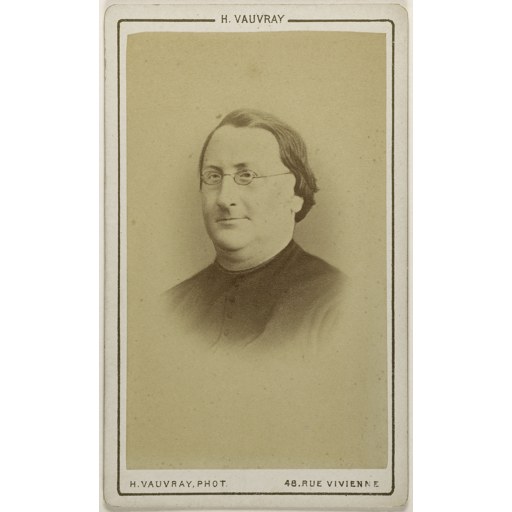
Vauvray, Hippolyte, photographe
License: CC0
Anatole de Bengy
Servant of God- Life Span
- 1824 - 1871 (age 47)
- Gender
- male
- Church
- Catholic
Places
Roles & Family
Religious Information
Biography
Anatole de Bengy was a French Jesuit priest of the nineteenth century, remembered among the Catholic clergy killed during the Paris Commune of 1871. He was born in 1824 in Bourges, the historic capital of Berry in central France, into a family of the provincial nobility. Raised in a Catholic milieu typical of the legitimist and conservative aristocracy of the Restoration and July Monarchy, he received a religious education and in due course entered the Society of Jesus. After the usual Jesuit formation of novitiate, studies, and later training, he was ordained a priest. His life thereafter followed the pattern of many French Jesuits of the mid-nineteenth century: teaching in the Society’s colleges, preaching, and giving spiritual retreats.
When the Franco-Prussian War broke out in 1870, de Bengy served as a chaplain, a role in which numerous priests accompanied French units and field hospitals. After the collapse of the Second Empire and the siege of Paris, he was in the capital at a Jesuit residence when, in March 1871, radical republican and socialist elements established the Paris Commune in opposition to the national government seated at Versailles. The Commune, anticlerical in outlook and hostile to religious congregations, arrested a number of Jesuits and other clergy in April 1871 and held them as hostages. De Bengy was among those detained, together with other members of his order then in Paris.
In the last days of May 1871, known as the Semaine sanglante or Bloody Week, the French army recaptured Paris street by street. As their military situation collapsed, some Communard groups executed remaining hostages. De Bengy was killed in Paris on 26 May 1871, in the massacre of hostages associated with the rue Haxo in the Belleville district, together with fellow Jesuits and other clerical and lay prisoners. Contemporary Catholic accounts presented these deaths as martyrdoms suffered out of hatred of the faith; secular and republican historians have more often treated them as political reprisals in a civil war. The basic facts of his arrest and violent death in the Commune’s final days are not in dispute.
De Bengy never married and had no children, having lived under the Jesuit vows of poverty, chastity, and obedience. He was not a bishop and held no patriarchal or papal office. The Catholic Church has not formally beatified or canonized him, though he has been commemorated in Jesuit and French Catholic memory alongside Pierre Olivaint and other Jesuits who died in the same events. Details of his burial are not clearly established in readily verified sources. His life is documented mainly in nineteenth-century Jesuit necrologies, contemporary press, and later histories of the Commune and of the Society of Jesus in France.