Anatolii is a saint of the Catholic Church (1880 - 1938).
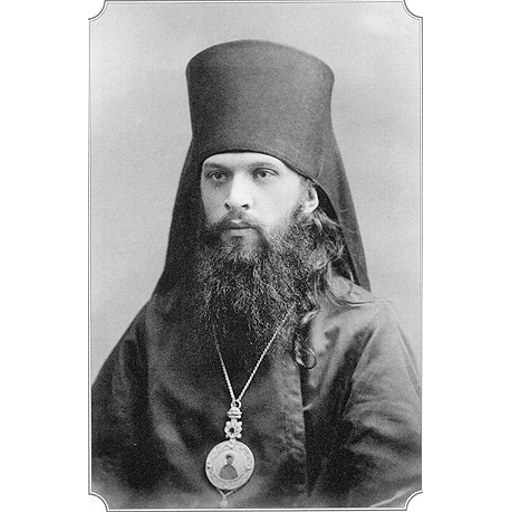
Unknown authorUnknown author
License: Public domain
Anatolii
Saint- Life Span
- 1880 - 1938 (age 58)
- Gender
- male
- Church
- Catholic
Places
Roles & Family
Canonization
Biography
Anatolii (born Andrei Grigorievich Grisyuk) was a metropolitan of the Russian Orthodox Church who is venerated as a hieromartyr among the New Martyrs and Confessors of Russia. He was born on 20 August 1880 in Kovel, a town in the Volhynian Governorate of the Russian Empire, into the family of a civil servant. He studied at the Volhynian Theological Seminary and then at the Kiev Theological Academy, completing the academy course in 1904 with the degree of candidate of theology. In 1903 he received monastic tonsure with the name Anatolii and was ordained to the holy orders as a hierodeacon and hieromonk. His early formation thus joined the academic theology of the late imperial Russian Church with the monastic tradition.
In the years after his graduation he taught in theological seminaries, notably at Kholm, and advanced into the professoriate of the higher theological schools. He specialized in the history of the ancient Church and in the study of Gnostic and related heterodox movements of late antiquity, producing dissertations that gained him the degrees of master and doctor of church history. He served as inspector of the Moscow Theological Academy and occupied other teaching and administrative positions. In 1913 he was consecrated Bishop of Chistopol, vicar of the Kazan diocese. Subsequent appointments took him to other sees during the First World War and the revolutionary years; he was made archbishop and, in time, metropolitan, and he is remembered in particular as Metropolitan of Odessa and Kherson.
Soviet religious policy in the 1920s brought arrest and imprisonment in connection with the seizure of church valuables. After a period of detention he returned to episcopal service under the constraints of the new regime. He continued to govern the Odessa diocese as metropolitan into the 1930s. Arrested again during the mass repressions of that decade, he was sent to the Ukhta-Pechora camp complex in the Komi region. He died there in 1938. The precise calendar day of his death is reported differently in various church and archival notices, and the site of his burial has not been identified.
At the Jubilee Bishops' Council of the Russian Orthodox Church in August 2000 he was glorified as a hieromartyr. He is commemorated with the New Martyrs and Confessors of the Russian Church and in the synaxis of the saints of Odessa. Published lives draw on academy records, lists of episcopal appointments, and the canonization dossiers; they present him as a learned monk-bishop whose ministry spanned the last years of the synodal Church and the first decades of Soviet persecution. Remaining gaps in the documentary record, especially concerning his final imprisonment, are acknowledged in careful accounts of his life.