Andrés Jiménez Galera is a blessed of the Catholic Church.
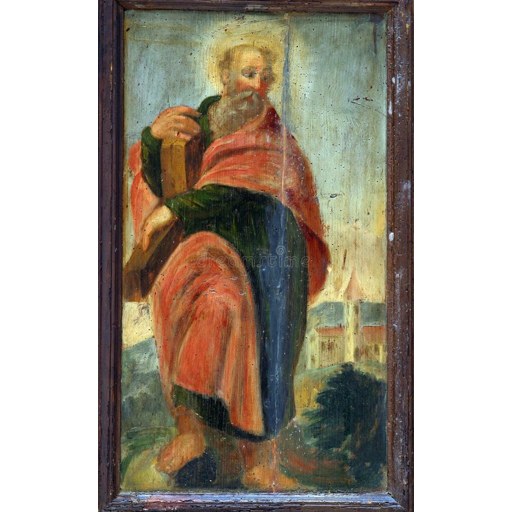
https://dreamstime.com/photos-images/saint-andrew.html
License: unknown
Andrés Jiménez Galera
Blessed- Gender
- male
- Church
- Catholic
Places
Roles & Family
Biography
Andrés Jiménez Galera is not a figure whose life can be reconstructed from the standard published instruments of church history and hagiography. The name itself is Spanish: Andrés is the ordinary Castilian form of Andrew, Jiménez is a common patronymic, and Galera may be either a second surname or a toponymic allusion to the town of Galera in the province of Granada. None of that onomastic evidence, however, yields a verified year of birth or death, a birthplace, a place of death or burial, or a securely identified office. No reliable biographical dictionary, diocesan catalogue, or martyrology that can be checked from ordinary historical literature isolates this exact combination of names with dates and a connected career.
The subject was not Bishop of Rome and was not Coptic Pope of Alexandria, nor did he hold the office of patriarch or catholicos in the Orthodox, Oriental Orthodox, Coptic, or Church of the East traditions; those sees and their occupants are fully listed in accessible reference works, and this name does not appear among them. It is likewise not possible, from the same class of sources, to assign a religious order, a spouse, a married or monastic state, or children. Claims of canonization or beatification, an assigned feast day, and a list of patronages cannot be verified and are therefore omitted rather than conjectured.
Spanish ecclesiastical records from the early modern period through the twentieth century contain many homonymous clergy, religious, and laypeople. Local parish books, notarial protocols, or unpublished congregation archives might in principle identify an Andrés Jiménez Galera, but such documents have not been cited in a form that meets ordinary standards of historical verification. Until they are, any richer narrative—offices held, a precise century of activity, a spiritual profile, or a place in a particular reform, mission, or persecution—would be invention rather than history.
This notice therefore records only what can be said without substituting guesswork for evidence. The person is known by a Spanish masculine name; he is not attested as pope or patriarch; and standard hagiographical and biographical repertoires do not supply a birth year, death year, places, order, family, feast, or cult. Further work would have to begin in regional Spanish archives rather than in the printed tradition of saints’ lives.