Andrey Sheptytsky is a venerable of the Catholic Church (1865 - 1944).
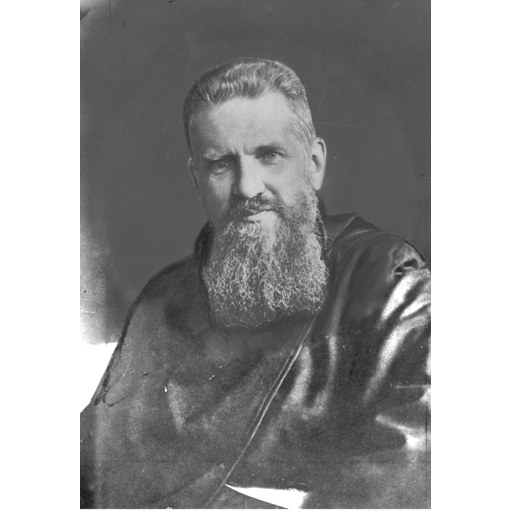
Unknown authorUnknown author
License: Public domain
Andrey Sheptytsky
Venerable- Life Span
- 1865 - 1944 (age 79)
- Gender
- male
- Church
- Catholic
Places
Relics & Where to Venerate
Location unknown
The bodily remains of Andrey Sheptytsky are a first-class relic. Venerated at Saint George's Cathedral.
Roles & Family
Religious Information
Biography
Andrey Sheptytsky was born Roman Aleksander Maria Szeptycki on 29 July 1865 in the village of Prylbychi in the Kingdom of Galicia and Lodomeria, then a crown land of the Austrian Empire. He came from the countly Szeptycki family, of Ruthenian origin but long Polonized in language and culture. His father was Count Jan Kanty Szeptycki and his mother Countess Zofia Fredro, daughter of the Polish dramatist Aleksander Fredro. Among his brothers were Stanisław Szeptycki, later a general in the Polish army, and Klymentiy Sheptytsky, who became a Studite monk and was later beatified. Raised in a Polish noble milieu, he studied law at the Jagiellonian University in Kraków and at the University of Wrocław, earning a doctorate. After a short period of service in the Austrian army, interrupted by serious illness, he underwent a change of religious and national orientation that led him toward the Ukrainian Greek Catholic Church and a recovered sense of Ruthenian identity.
In 1888 he entered the Basilian monastery at Dobromyl and took the name Andrey. He pursued theological studies and was ordained a priest in 1892. Consecrated bishop in 1899 for the eparchy of Stanyslaviv, he was named Metropolitan of Halych and Archbishop of Lviv in 1900 and enthroned in 1901, becoming head of the Ukrainian Greek Catholic Church, an office he held until his death. As metropolitan he worked to restore Eastern Christian monasticism and liturgy, to improve clerical education, and to expand charitable, educational, and cultural institutions. He founded the Ukrainian National Museum in Lviv, supported scholars and artists, and sought greater legal and educational rights for Ukrainians under Austrian and later Polish rule. During the First World War, after Russian forces occupied Galicia, he was arrested in 1914 and interned in the Russian interior until 1917.
In the interwar years he led his Church within the Second Polish Republic, often in tension with Polish state policy toward the Ukrainian minority, while remaining in communion with Rome and trying to avoid revolutionary violence. The Soviet occupation of eastern Poland in 1939 brought confiscations and pressure on the Church; the German occupation from 1941 brought still greater moral and political dilemmas. Sheptytsky initially greeted the departure of Soviet power but soon protested Nazi atrocities. He wrote to German authorities and to Pope Pius XII against the mass murder of Jews, forbade clergy to take part in violence, and organized a network that hid Jewish children and adults in Greek Catholic monasteries, convents, and his metropolitan residence. Historians continue to debate aspects of his wartime political contacts, including relations with Ukrainian nationalist groups, but his efforts to rescue Jews are attested by survivors.
Sheptytsky died in Lviv on 1 November 1944, after Soviet forces had retaken the city, and was buried in the crypt of Saint George's Cathedral. The Ukrainian Greek Catholic Church was soon suppressed by the Soviet state. A cause for his beatification was later introduced; Pope Francis declared him Venerable in 2015. He is remembered as the dominant figure of the modern Ukrainian Greek Catholic Church and as a complex actor in the national and wartime history of Galicia.