Andrzej Cikoto is a servant of god of the Catholic Church (1891 - 1952).
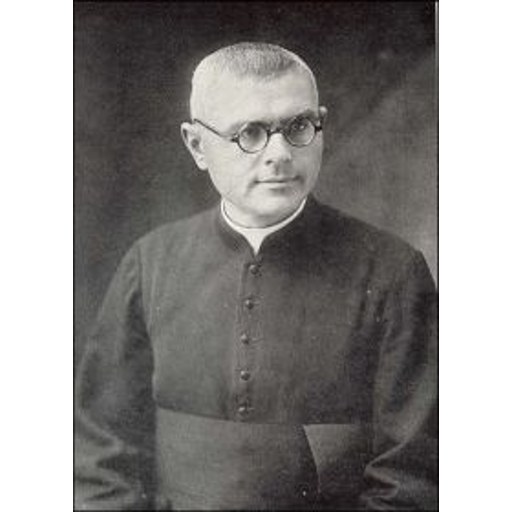
невядомы
License: Public domain
Andrzej Cikoto
Servant of God- Life Span
- 1891 - 1952 (age 61)
- Gender
- male
- Church
- Catholic
Places
Roles & Family
Religious Information
Biography
Andrei Tsikota, known in Polish as Andrzej Cikoto, was a Belarusian Catholic priest who served in both the Latin and Byzantine rites and became one of the principal leaders of the Belarusian Greek Catholic Church in the first half of the twentieth century. He was born on 5 December 1891 in the village of Turovlya (Turoŭlia) near Polotsk, in the Vitebsk Governorate of the Russian Empire, into a Belarusian family. After theological studies at the seminary in Vilnius he was ordained a priest of the Latin rite in 1914. His early ministry unfolded during the First World War and the political transformations that followed the collapse of imperial rule in the region, as he served in pastoral assignments in the Belarusian lands.
In 1920 Tsikota entered the Congregation of Marian Fathers of the Immaculate Conception. He was sent to Rome for advanced studies and earned a doctorate in theology at the Pontifical Gregorian University. Returning to territory then under Polish administration, he was assigned to the Marian house at Druya (Druja), a center of Belarusian Catholic educational and pastoral work. There he served as superior of the community and was closely involved with the gymnasium and with efforts to sustain Belarusian religious and cultural life. In 1933 he was elected Superior General of the Marian Fathers and thereafter directed the congregation from Rome.
Toward the end of the 1930s the Holy See entrusted him with the care of Eastern-rite Catholics of Belarusian nationality. Tsikota adopted the Byzantine rite and was appointed Apostolic Administrator of the Belarusian Greek Catholic Church. The outbreak of the Second World War and the Soviet occupation of eastern Poland and the Baltic region placed this mission under extreme pressure. He returned from Rome to the region in order to exercise his charge among the faithful.
Soviet authorities arrested Tsikota, and he was subjected to imprisonment and deportation within the Gulag system. He was sent to camps in the far north of the Soviet Union and died on 11 February 1952 at the Abez camp in the Komi ASSR. He has been remembered by Belarusian Catholics as a confessor who remained faithful under persecution. Although interest in his cause for beatification has been expressed in connection with other clergy who died in Soviet camps, he has not been formally beatified or canonized by the Catholic Church.