Anectus is a saint of the Catholic Church. Anectus's feast day is celebrated on June 27.
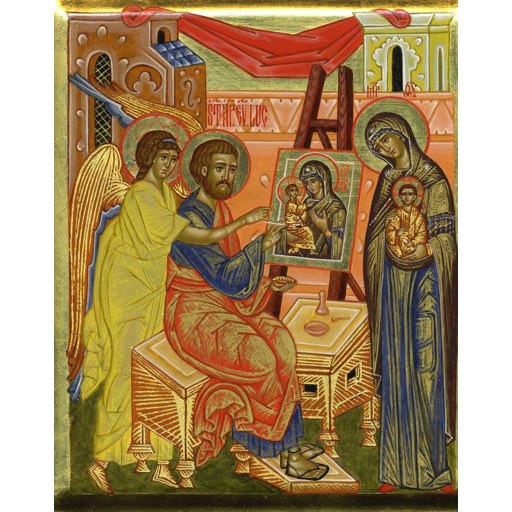
https://www.dailyartmagazine.com/saint-luke-the-ultimate-holy-painter/
License: unknown
Anectus
Saint- Feast Day
- June 27
- Gender
- male
- Church
- Catholic
Places
Roles & Family
Biography
Saint Anectus is commemorated as an early Christian martyr in the hagiographical tradition of the Church. He is linked in the martyrologies with the city of Caesarea in Cappadocia, an important urban center in the eastern Roman Empire corresponding to modern Kayseri in Turkey. Surviving historical sources provide almost no personal details about his life. He is known solely from brief entries that record his martyrdom at that location. No contemporary documents, inscriptions, or detailed acts of his passion have been preserved, which is typical for many of the lesser-known martyrs of the pre-Constantinian period.
Cappadocia possessed a Christian community from at least the second century, as attested by the correspondence of early Church writers and the later prominence of the region. The third century brought repeated waves of persecution under emperors such as Decius, Valerian, and the tetrarchy of Diocletian. Christians in provincial capitals like Caesarea were particularly exposed to imperial edicts requiring sacrifice to the gods and the emperor. It is within this broader setting of Roman religious policy and local enforcement that the memory of Anectus as a martyr was kept. Precise dating of his death, the name of the governor who condemned him, and the manner of his execution remain unknown.
The Roman Martyrology records Anectus on 27 June simply as a martyr at Caesarea in Cappadocia. Eastern liturgical calendars likewise preserve his name in some instances, though without an elaborate synaxarion entry. Unlike the Cappadocian Fathers of the following century, whose writings and biographies are extensive, Anectus belongs to the largely anonymous rank of those who died for the faith before Christianity became licit. No evidence exists of a widespread cult, dedicated churches, or specific patronages attached to him in later medieval or modern devotion.
Hagiographers and historians must therefore exercise caution. The appearance of a name and a place in a martyrology compiled centuries after the events does not by itself constitute a full biography. Anectus may have been a member of the clergy, a soldier in the Roman army stationed in the province, a tradesman, or a private citizen; none of these possibilities can be confirmed. Information concerning his family, marital status, or early life is entirely lacking. His story, such as it is, illustrates both the reality of persecution in the Roman East and the fragmentary nature of the evidence that remains for countless individual Christians of that era.
In the fourth century Cappadocia emerged as a major theological center, yet the foundations of that Christian culture included the remembered sacrifices of earlier generations. The feast of Anectus on 27 June thus serves as a modest liturgical reminder of those foundations. While modern critical scholarship cannot reconstruct a detailed life, the Church's tradition continues to honor him among the martyrs whose blood was regarded as the seed of the Church in Asia Minor.