Ángeles Sorazu is a servant of god of the Catholic Church (1873 - 1921).
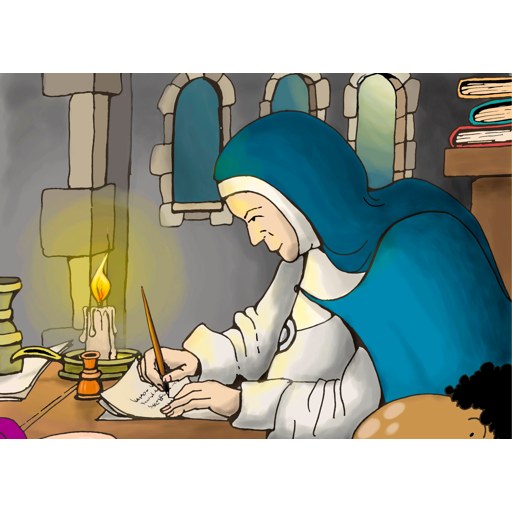
Ander Hormazuri
License: CC BY-SA 3.0
Ángeles Sorazu
Servant of God- Life Span
- 1873 - 1921 (age 48)
- Gender
- female
- Church
- Catholic
Places
Roles & Family
Religious Information
Biography
Ángeles Sorazu was a Spanish Catholic nun and mystic of the Order of the Immaculate Conception, commonly called the Conceptionists. She was born in 1873 in Zumárraga, in the Basque province of Gipuzkoa in northern Spain. The Basque Country of her childhood was marked by strong parish Catholicism and popular Marian devotion, and it was in that setting that her religious vocation took shape. She entered the Conceptionist monastery in Valladolid and was known in religion as María de los Ángeles. The Conceptionists, founded in the fifteenth century by Saint Beatrice of Silva, live a cloistered contemplative life centered on the mystery of the Immaculate Conception; Sorazu’s adult life was spent within that enclosure and that spirituality.
In the Valladolid monastery she followed the ordinary round of choir, silence, and hidden labor that characterized enclosed women’s communities in Restoration and early twentieth-century Spain. Later readers of her papers present her as a nun of marked interior intensity, given to prolonged prayer and to mystical experience focused especially on the person and privileges of the Blessed Virgin Mary. Spanish mysticism after the Golden Age had become less publicly spectacular, but it had not disappeared; Sorazu belongs to that quieter stream of contemplative women who continued to write of union with God from behind the grille. She was not a foundress, a public preacher, or a figure of political Catholicism. Her witness was that of the cloister.
Her surviving writings treat the interior life and Marian theology. They reflect on the Virgin Mary’s place in the work of redemption and on the path by which a soul is drawn into deeper conformity with Christ. These pages have been read mainly by specialists in spirituality and by members of her own order rather than by a broad popular audience. They place her among the lesser-known Spanish women mystics of the turn of the twentieth century, a period when the Church in Spain was also producing more famous figures of a different kind. Sorazu’s contribution is theological-spiritual rather than institutional, and her name remains largely confined to studies of Spanish mysticism and to the memory of the Conceptionist family.
She died in Valladolid in 1921, still in her late forties. The Catholic Church has not beatified or canonized her, and she is not assigned a feast in the general Roman calendar, nor is she officially invoked as patron of particular places, professions, or causes. Her memory is preserved chiefly as that of a hidden contemplative from the Basque Country who lived and died in Castile, and whose writings offer a Marian and mystical testimony from cloistered life at the end of the nineteenth century and the beginning of the twentieth. Where archival details of her family, the precise chronology of her profession, or the exact place of burial are not securely established in widely available historical literature, they are here left unstated rather than conjectured.