Angelo Carletti di Chivasso is a blessed of the Catholic Church (1411 - 1495). Angelo Carletti di Chivasso's feast day is celebrated on 12 April.
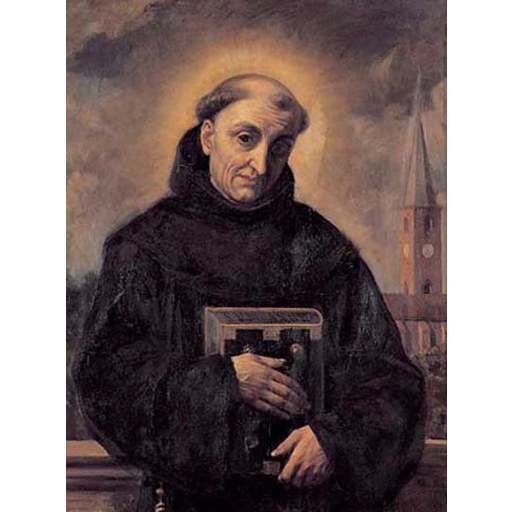
Unknown authorUnknown author
License: CC BY-SA 4.0
Angelo Carletti di Chivasso
Blessed- Life Span
- 1411 - 1495 (age 84)
- Feast Day
- 12 April
- Gender
- male
- Church
- Catholic
Places
Relics & Where to Venerate
Location unknown
The bodily remains of Angelo Carletti di Chivasso are a first-class relic. Venerated at shrine of Our Lady of the Angels.
Roles & Family
Religious Information
Canonization
Biography
Angelo Carletti, known in Latin as Angelus de Clavasio and in Italian as Angelo da Chivasso, was born in 1411 at Chivasso in Piedmont, then under the House of Savoy. He came from the noble Carletti family. He studied civil and canon law and took the doctorate in both laws at the University of Bologna, after which he followed a legal and civic career for a time. In about 1441, when he was roughly thirty years old, he entered the Observant branch of the Order of Friars Minor. From that point he lived as a friar, combining the Observant emphasis on poverty and itinerant preaching with the scholastic training he had already received as a jurist.
Within the Observants he became a prominent preacher, superior, and moral theologian. He served in a succession of internal offices, including guardian of convents and vicar provincial, and he was at times vicar general of the Cismontane Observants. After the Ottoman capture of Otranto in 1480, Pope Sixtus IV used him as a preacher of a crusade in northern Italy. In Piedmont he also preached among communities influenced by the Waldensian movement, seeking conversions by instruction rather than by force. Contemporaries remembered him as austere, learned, and pastoral, a typical figure of the Observant reform in fifteenth-century Italy rather than a purely academic schoolman.
His principal written work is the Summa de casibus conscientiae, commonly called the Summa Angelica, first printed at Venice in 1486. It is an alphabetical handbook of moral theology and casuistry for confessors, treating cases of conscience, censures, and practical questions of Christian life. The book went through many editions into the sixteenth century and became a standard penitential reference. In 1520 Martin Luther burned a copy of it at Wittenberg together with the papal bull Exsurge Domine, which indicates how closely the work was identified with the late medieval confessional and scholastic tradition. Angelo also wrote shorter pieces connected with confession and with the Holy Land.
He died on 12 April 1495 at Cuneo in Piedmont. A local and Franciscan cult grew up after his death. In 1753 Pope Benedict XIV confirmed that cult, and Angelo is venerated as Blessed Angelo of Chivasso, with feast on 12 April. He was never canonized. He is remembered above all as the author of the Summa Angelica and as a leading Observant Franciscan moralist of the later fifteenth century.