Anne Bourdon is a venerable of the Catholic Church (1644 - 1711).
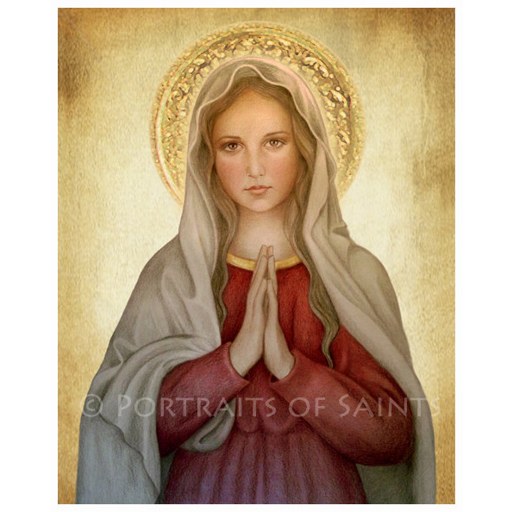
https://inthevintagekitchen.com/2013/03/18/an-icon-and-an-artist-identified
License: unknown
Anne Bourdon
Venerable- Life Span
- 1644 - 1711 (age 67)
- Gender
- female
- Church
- Catholic
Places
Roles & Family
Religious Information
Biography
Anne Bourdon was born on 29 August 1644 at Quebec, in the French colony of New France. She was the daughter of Jean Bourdon, the colony's first engineer-surveyor and later attorney general of the Sovereign Council, and of Jacqueline Potel. Her birth placed her among the earliest generation of French children born in the St. Lawrence valley, when the European population of Canada was still very small and when the principal religious houses of Quebec, including the Ursulines, the Hotel-Dieu, and the Jesuit college, had been established only a few years earlier. She received her education at the Ursuline monastery of Quebec, founded in 1639 by Marie de l'Incarnation (Marie Guyart) and Madeleine de La Peltrie. That house offered instruction to French and Indigenous girls and was the principal school for young women in the colony during the seventeenth century.
On 2 February 1662 she received the Ursuline habit at Quebec, and on 2 February 1664 she made her religious profession, taking the name Sainte-Agnes. Standard biographical notices identify her as the first woman born in Canada to enter the Ursuline order. Her entire adult life was spent in the cloistered monastery at Quebec, whose rule combined contemplative prayer with the education of girls. The community in which she lived was still close to its founding generation: Marie de l'Incarnation remained a central spiritual presence until her death in 1672, and the house continued to face the material hardships, fires, and wartime alarms that marked colonial Quebec in the later seventeenth century.
Mother Sainte-Agnes was entrusted with a succession of offices that indicate the confidence of her community. She served repeatedly as assistant, as mistress of novices, and as depositary, the sister responsible for the temporal administration of the monastery. She was elected superior on 15 October 1682 and was re-elected in 1685. After an interval out of office she again served as superior from 1693 to 1699 and from 1705 to 1708. Those terms coincided with a difficult period in the history of New France, including conflict with the Iroquois and with the English colonies, the consolidation of episcopal authority under Bishop Francois de Laval and his successors, and the slow growth of a Canadian-born clergy and female religious. As superior she was responsible for the internal life of the cloister and for the school that educated the daughters of officers, merchants, and habitants as well as some Indigenous pupils.
She died at Quebec on 5 November 1711, after nearly fifty years of religious profession. Anne Bourdon was not canonized or beatified and is not the subject of a liturgical feast or of recorded patronages; she belongs to the history of colonial religious life rather than to the calendar of saints. Her importance for later historians lies in her status as the first Canadian Ursuline and in her long service, including several terms as superior, in one of the most important female communities of New France. She thus represents the transition from a missionary church staffed largely by recruits from France to a church in which Canadian-born women held positions of leadership within the cloister.