Anne de Guigné is a venerable of the Catholic Church (1911 - 1922).
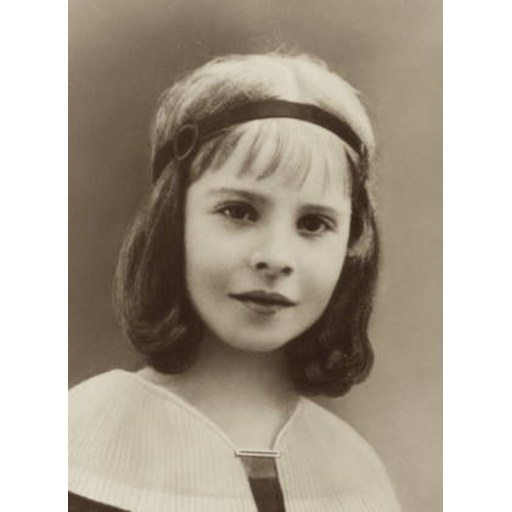
License: CC0
Anne de Guigné
Venerable- Life Span
- 1911 - 1922 (age 11)
- Gender
- female
- Church
- Catholic
Places
Relics & Where to Venerate
Location unknown
The bodily remains of Anne de Guigné are a first-class relic. Venerated at Annecy-le-Vieux.
Roles & Family
Biography
Anne de Guigné was born on 25 April 1911 at the Château de la Cour in Annecy-le-Vieux, in the Haute-Savoie region of eastern France. She was the eldest child of Count Jacques de Guigné, an officer of the Chasseurs Alpins, and of Antoinette de Buffévent. The family belonged to the Catholic nobility of Savoy. Testimony later gathered for her cause of beatification describes her early childhood as marked by intelligence and energy, but also by a strong will that could become stubbornness and harshness toward her younger siblings. She was closely attached to her father.
In July 1915, when Anne was four years old, Count Jacques de Guigné was killed at the front during the First World War. Early biographies and the witnesses of the cause present this loss as the occasion of a marked change in the child’s character. Under her mother’s guidance she began a determined struggle against her faults. Those who knew her spoke of growing self-control, a spirit of prayer, devotion to the Eucharist and to the Virgin Mary, and small sacrifices offered for sinners and for the dead. She showed concern for the poor. A dispensation was granted so that she might receive Holy Communion at a young age, and she made her First Communion on 26 March 1919.
In the following years she lived at home and received a Christian education typical of her milieu. Observers from this period testified to obedience, charity toward her siblings, patience, and a habit of prayer unusual in so young a child. Toward the end of 1921 she fell ill with meningitis. She suffered for several weeks and, according to those around her, bore the pain with resignation while continuing to pray. She died on 14 January 1922 in Cannes, at the age of ten. She was never married and had no children, and she did not belong to a religious order.
A reputation for holiness spread after her death in her native region and beyond. A diocesan inquiry was opened and the cause for beatification was taken up at Rome. On 3 March 1990 Pope John Paul II promulgated the decree recognizing that she had practiced the theological and cardinal virtues to a heroic degree, thereby declaring her Venerable. She has not been beatified or canonized and has no official liturgical feast or established patronages. She is remembered in twentieth-century Catholic writing as an example of conversion and growth in holiness in early childhood, within a French Catholic aristocratic family during and after the First World War.