Anthimus is a saint of the Catholic Church (d. 303). Anthimus's feast day is celebrated on 27 April; 3 September.
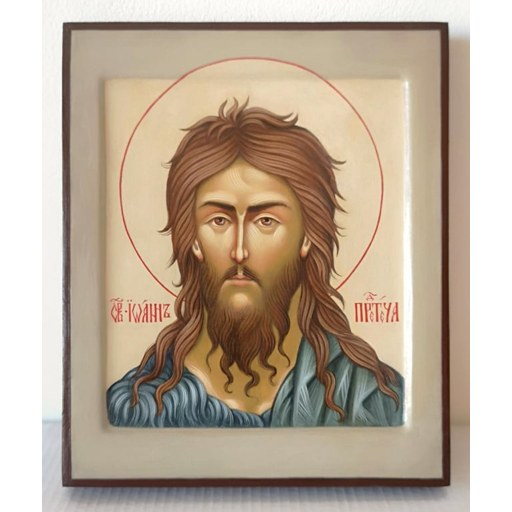
https://www.reddit.com/r/OrthodoxChristianity/comments/1g99g3d/icon_of_saint_john_the_forerunner_and_baptist_i/
License: unknown
Anthimus
Saint- Life Span
- d. 303
- Feast Day
- 27 April; 3 September
- Gender
- male
- Church
- Catholic
Places
Roles & Family
Biography
Anthimus (also Anthimos) was bishop of Nicomedia in Bithynia, in northwestern Asia Minor, at the outbreak of the Great Persecution under Diocletian and Galerius. Nicomedia was then an imperial residence and one of the chief cities of the eastern Roman Empire, with a large and organized Christian community. The principal near-contemporary witness is Eusebius of Caesarea, who records in the eighth book of the Ecclesiastical History that Anthimus, who at that time presided over the church in Nicomedia, was beheaded for his testimony to Christ, and that many other clergy and laypeople of the city likewise suffered. The first imperial edict against the churches was posted at Nicomedia in February 303; the cathedral there was destroyed, and after fires in the palace were blamed on Christians the city became a focus of especially severe measures. In that setting a bishop of Anthimus’s rank would have been an early target. No ancient source records his date or place of birth, his family, or his career before the episcopate.
Later Greek and Latin passions expand Eusebius’s brief notice into a fuller martyrdom story that historians treat with caution. According to these accounts, Anthimus was sought by the authorities, withdrew for a time to a village near Nicomedia, continued to instruct his flock by letter, and was eventually arrested, interrogated, tortured, and put to death by the sword. Some versions associate with him priests, deacons, and lay martyrs of the Nicomedian church whose names appear in later menologia. The legendary overlay—conversions of soldiers, conventional torture scenes, and similar motifs—cannot be verified independently. The core fact of a bishop of Nicomedia named Anthimus executed at the outset of the Diocletianic persecution is accepted on the strength of Eusebius. The year of death is customarily given as 303, in the first wave of the persecution; a minority of later notices have suggested other years in the same decade, but they lack comparable authority.
The cult of Anthimus is ancient in both East and West. The Roman Martyrology commemorates him on 27 April as bishop of Nicomedia who, after a distinguished confession of faith, obtained martyrdom by beheading in the persecution of Diocletian. In the Byzantine liturgical tradition he is kept on 3 September as a hieromartyr, often together with other Nicomedian martyrs. His name was transmitted through synaxaria and menologia, and churches in the Greek East have borne it. Like other pre-Constantinian martyrs he was not the object of a formal papal canonization of the later medieval type; recognition came through local cult and through the lists of the persecuted compiled by the early church historians. No securely identified tomb or early relic translation is recorded in the earliest sources.
Anthimus of Nicomedia should be distinguished from other figures of the same name, including a Roman priest-martyr, later patriarchs of Constantinople, and post-Byzantine saints such as Anthimos of Chios and Anthim the Iberian. Almost nothing can be established about his personal life: there is no evidence regarding marriage, children, or membership in a monastic order. His historical importance is that of a named episcopal victim in an imperial capital at the start of the last empire-wide persecution of Christians, which anchors him more firmly than most Diocletianic martyrs whose dossiers rest only on legendary passions.