Anthimus of Nicomedia is a saint of the Pre-Schism (Universal) Church (d. 303). Anthimus of Nicomedia's feast day is celebrated on 3 September.
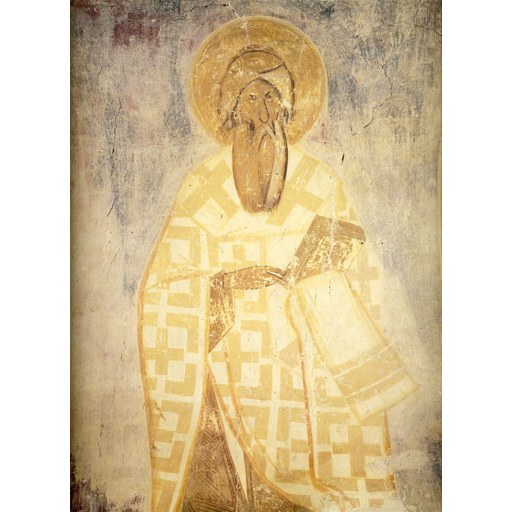
Феофан Грек (?)
License: Public domain
Anthimus of Nicomedia
Saint- Life Span
- d. 303
- Feast Day
- 3 September
- Gender
- male
- Church
- Pre-Schism (Universal)
Places
Roles & Family
Biography
Anthimus (also Anthimos) of Nicomedia was bishop of Nicomedia in Bithynia in the late third and early fourth centuries and is counted among the principal episcopal martyrs of the Great Persecution under Diocletian. Nicomedia, on the eastern shore of the Propontis (the site of modern İzmit in northwestern Turkey), was then an imperial residence and one of the foremost cities of the eastern Roman Empire. Because the court itself was often present there, the Christian community of Nicomedia stood in unusual proximity to imperial power, and the city’s church became an early target when the persecution began. Almost nothing reliable is known of Anthimus’s origins, formation, or the date of his elevation to the episcopate; he enters the historical record as the sitting bishop at the outbreak of the persecution.
The first edict against the Christians was posted at Nicomedia in February 303. Contemporary witnesses, above all Lactantius and Eusebius of Caesarea, describe the demolition of the city’s principal church and a subsequent intensification of measures after fires in the imperial palace were blamed on Christians. Eusebius, writing within living memory of the events, names Anthimus explicitly among the distinguished victims: the bishop of Nicomedia was beheaded. That notice, brief as it is, is the firmest historical core of the saint’s biography. The conventional date of his death is 303, at the beginning of the persecution; later martyrological tradition has sometimes given neighboring years, but the association with the opening phase of Diocletian’s campaign at Nicomedia is consistent across the early sources.
Later Greek hagiography, including a passio transmitted under the name of Symeon Metaphrastes and related texts, expanded this kernel into a fuller narrative. In those accounts Anthimus is said to have written letters of encouragement to imprisoned Christians, to have been sought by imperial officers, and to have converted or instructed various soldiers and officials before his execution; a deacon, often named Theophilus, is made the bearer of his correspondence. These episodes belong to the legendary elaboration of the cult and cannot be verified from fourth-century evidence. A separate, very large Nicomedian martyr-commemoration (the so-called twenty thousand martyrs of Nicomedia) is likewise a later liturgical construction and should not be collapsed uncritically into Anthimus’s own dossier, though it reflects the same city’s memory of the persecution.
Anthimus was venerated as a martyr-bishop in both East and West. His principal feast is 3 September, the date given in the Roman Martyrology and in the Byzantine liturgical calendar. Eusebius also groups him with other leading clerical martyrs of the period, such as Lucian of Antioch, as a representative of the episcopal order that suffered in the Great Persecution. No contemporary evidence survives for his burial place, for any religious order, or for marriage or children; as with most pre-Constantinian bishops, those details are simply unrecorded. He was never Bishop of Rome or patriarch of a patriarchal see: Nicomedia was an important Bithynian bishopric, later a metropolitan church, but not a patriarchate. His historical significance rests on the early, independent testimony that a bishop of the imperial city was put to death at the outset of the last empire-wide persecution of Christians, and on the subsequent liturgical memory that preserved his name.