Anthimus of Rome is a saint of the Catholic Church (d. 303). Anthimus of Rome's feast day is celebrated on 11 May.
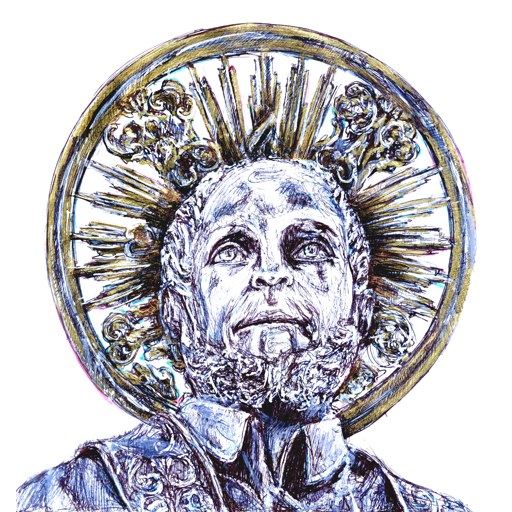
Antimo Puca
License: CC0
Anthimus of Rome
Saint- Life Span
- d. 303
- Feast Day
- 11 May
- Gender
- male
- Church
- Catholic
Places
Sacred Place

Roles & Family
Canonization
Biography
Saint Anthimus of Rome, known in Italian as Sant'Antimo, was a Christian priest and martyr whose cult is recorded in the ancient martyrologies of the Roman Church. Almost nothing about his life can be established from contemporary historical evidence. The principal narrative of his passion is a later hagiographic passio, conventional in form and not independently corroborated. The Roman Martyrology commemorates him on 11 May as a priest who, after a life marked by virtue and preaching, was thrown into the Tiber during the persecution of Diocletian, rescued, and afterwards beheaded. The Great Persecution began in 303, and that year is the traditional date assigned to his death at Rome.
According to the legendary account, Anthimus was a priest of Eastern origin, sometimes said to have come from Bithynia in Asia Minor, who took refuge in Rome to escape imperial persecution. There he is said to have converted a number of pagans, including a priest named Sycinius or Sicinnius. Brought before a prefect called Maximus, he refused to offer sacrifice to the gods. Condemned to drowning, he was cast into the Tiber with a stone about his neck, but an angel is said to have delivered him and restored him to his oratory. Recaptured, he was finally executed by beheading on the Via Salaria. These episodes follow well-known patterns of Roman martyr acts and should be read as pious legend rather than as a recoverable biography.
The cult of Anthimus is of considerable antiquity. His name appears in the Martyrologium Hieronymianum, which attests to liturgical remembrance of a martyr Anthimus at Rome. In the early medieval period his relics became associated with Tuscany. The great Benedictine Abbey of Sant'Antimo, in the Starcia valley near Montalcino, takes its dedication from him. According to the abbey's foundation legend, Charlemagne, returning from Rome, was delivered from a plague that afflicted his army and in thanksgiving established a monastery and deposited relics of Saint Anthimus there. Whatever the historical kernel of that story, the Romanesque abbey church became the principal shrine of the saint and the center of his medieval cult in central Italy.
Modern historians distinguish Anthimus of Rome from other early Christian figures of the same name, above all from Saint Anthimus of Nicomedia, a bishop martyred in Bithynia under Diocletian, whose feast falls on a different day. They also separate him from later bishops and patriarchs called Anthimus. As a priest-martyr of the Diocletianic age, Anthimus of Rome belongs to the large company of Roman saints whose existence and local cult are plausible, but whose transmitted lives are largely unhistorical. The Church continues to honor him on 11 May.