Anthony Maria Zaccaria is a saint of the Catholic Church (1502 - 1539). Anthony Maria Zaccaria's feast day is celebrated on 5 July. Anthony Maria Zaccaria is the patron saint of Barnabites;Angelic Sisters of Saint Paul;Laity of Saint Paul;physicians.
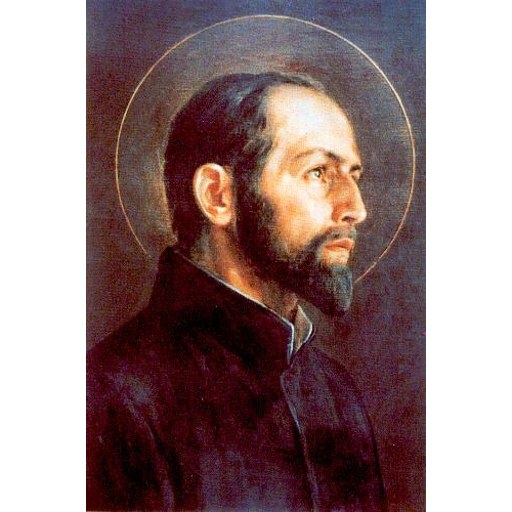
Unknown authorUnknown author
License: CC BY-SA 3.0
Anthony Maria Zaccaria
Saint- Life Span
- 1502 - 1539 (age 37)
- Feast Day
- 5 July
- Gender
- male
- Church
- Catholic
Places
Relics & Where to Venerate
Location unknown
His mortal remains are now enshrined at the Church of Saint Barnabas in Milan, Italy
Roles & Family
Religious Information
Patronage
Barnabites;Angelic Sisters of Saint Paul;Laity of Saint Paul;physicians
Canonization
Biography
Anthony Maria Zaccaria was born in 1502 in Cremona, in the Duchy of Milan in northern Italy. His father, Lazzaro Zaccaria, died while Anthony was still an infant, and he was raised by his mother, Antonia Pescaroli, who belonged to a devout noble household. He received a humanist and scientific education and studied philosophy and medicine at the University of Padua, taking a doctorate in medicine in the mid-1520s. After a short period of medical practice in Cremona he turned decisively toward the priesthood, undertook theological study, and was ordained in the late 1520s. Contemporary and later Catholic sources present him as unmarried and celibate from that point onward; there is no reliable evidence of a spouse or of children.
In the early 1530s he settled in Milan, then a principal theatre of Catholic reform in Lombardy. There he joined a circle of clergy and laity committed to moral and pastoral renewal, among them Countess Ludovica Torelli of Guastalla. With Bartolomeo Ferrari and Giacomo Antonio Morigia he founded the Congregation of Clerics Regular of Saint Paul, later called the Barnabites from their association with the church of San Barnaba in Milan. Pope Clement VII approved the congregation in 1533, and it received further confirmation under Pope Paul III. Zaccaria also helped establish the Angelic Sisters of Saint Paul, a community of women religious, and encouraged a third grouping of married laity sharing the same Pauline spirituality. The Barnabites combined a regular clerical life with preaching, confession, and works of charity, and they became one of the smaller but distinctive orders of the Catholic Reformation in Italy.
Zaccaria’s public ministry emphasized frequent Communion, devotion to the Eucharist and to the Passion of Christ, and the reform of both clergy and laity. He is closely associated with the spread in Milan of the Forty Hours Devotion, a practice of continuous prayer before the Blessed Sacrament. His preaching and organization belonged to the same sixteenth-century Italian reform current as figures such as Gaetano da Thiene, and they anticipated concerns later taken up at the Council of Trent. He insisted on Scripture and the Fathers as the ground of preaching, on the dignity of the priesthood, and on concrete works of mercy. His medical training also left a mark on later devotion to him as a patron of physicians.
Austere living and unceasing apostolic labour undermined his health. In 1539, after missionary activity connected with Guastalla, he fell seriously ill and was brought to his mother’s house in Cremona, where he died on 5 July 1539, still in his thirties. He was first buried in Cremona; his relics were later translated to the church of San Barnaba in Milan, the mother church of the Barnabites, where they remain. Cult grew slowly. He was beatified by Pope Leo XIII on 3 January 1890 and canonized by the same pope on 27 May 1897. The Catholic Church observes his feast on 5 July. He is honoured as founder and patron of the Barnabites and of the Angelic Sisters of Saint Paul, and is also invoked by the associated laity and by physicians.